
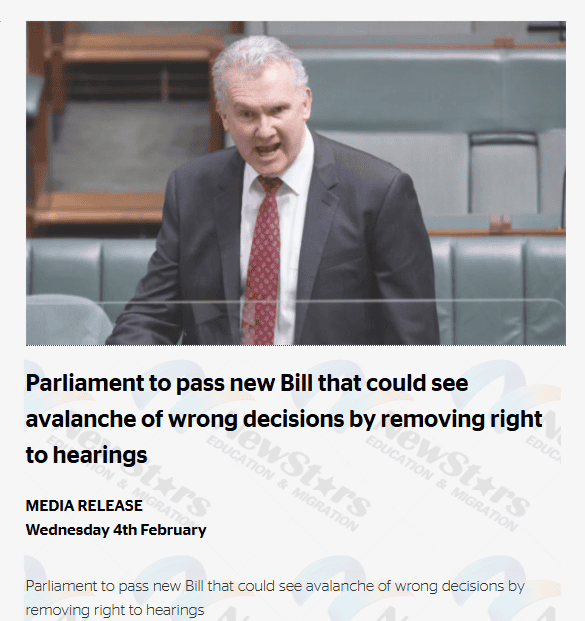
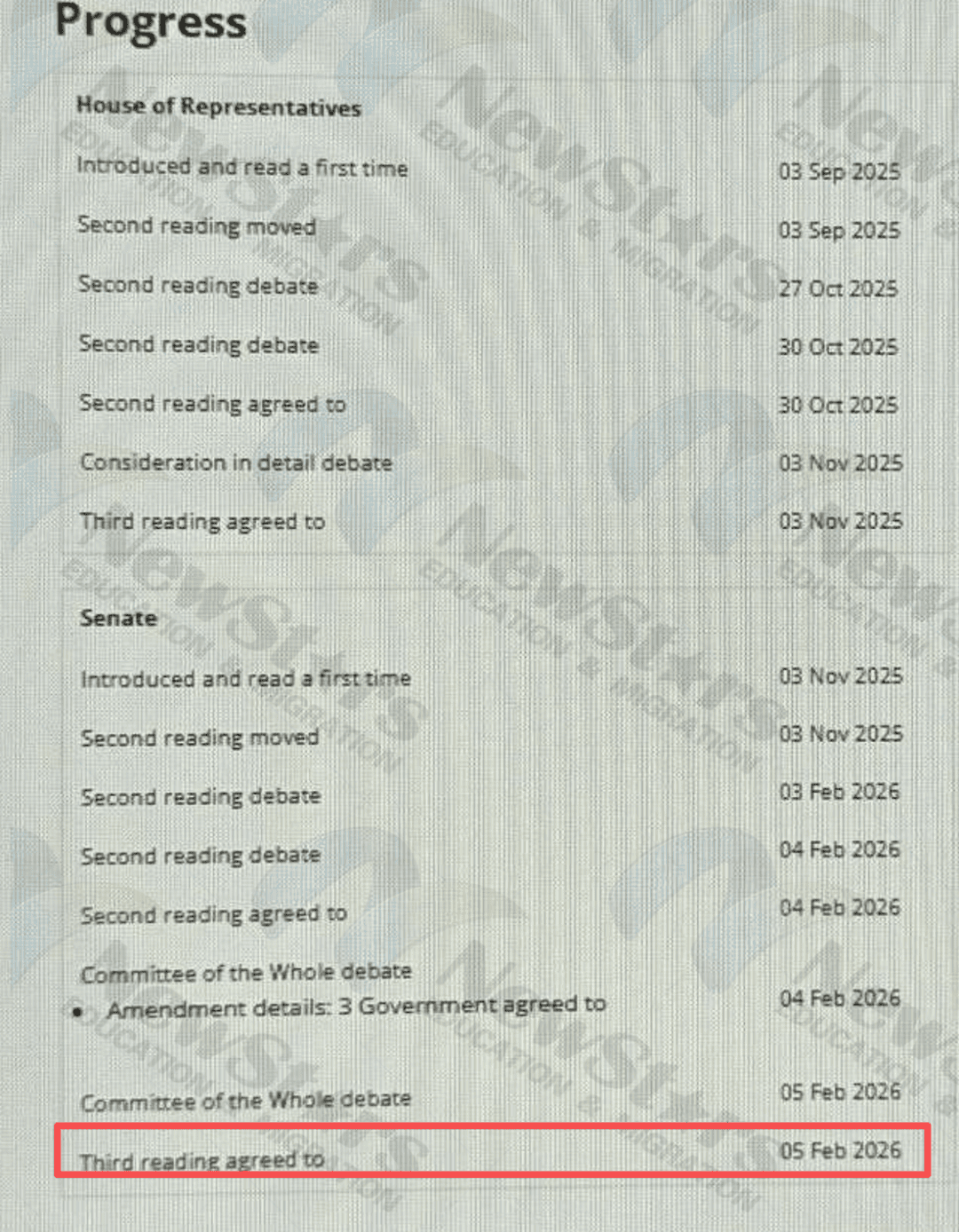
The amendment removing the hearing requirement for temporary-visa ART appeals was formally passed by Parliament today, following multiple rounds of debate in both the House of Representatives and the Senate. Today the Senate committee conducted its third and final full reading, officially passing the amendment, which will primarily affect student-visa appeal applicants.
Background:
Previously, whenever a temporary or permanent visa refusal was appealed to the ART, a hearing would normally be held, unless the arbitrator (member) could make a decision in the applicant’s favour (that is, set aside the Department of Home Affairs’ refusal) on the documents alone. The process was originally designed to safeguard procedural fairness and justice.
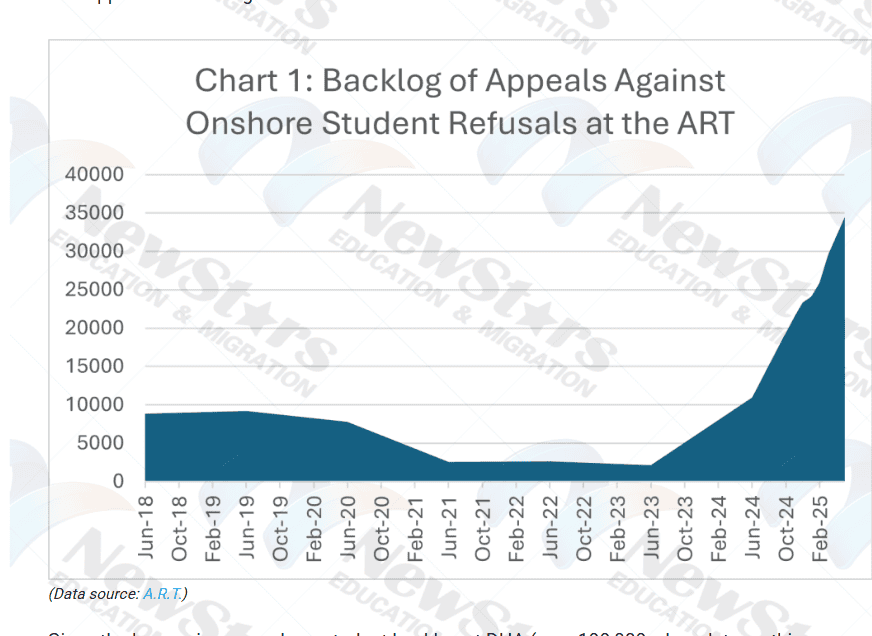
However, after the Department of Home Affairs began refusing VET-sector student visas in large numbers 2 to 3 years ago, many of those refused lodged appeals with the ART. The ART was never fast to begin with, and the flood of new applications has made processing slower and slower — most student-visa appeals now take around 18 months, and we have seen clients whose courses were almost finished by the time they received an appeal decision.
As you can see in the chart below, the backlog has reached 35,000, with close to 2,000 new applications lodged every month in 2025.
On one hand the ART’s workload is excessive, indirectly consuming resources that should go to other categories; on the other hand, the appeal process has been exploited as a loophole for applicants to remain in Australia for extended periods.
The basic ART process
Lodgement —— Supplementary submissions —— Hearing scheduled —— Decision issued
The hearing is mainly where the arbitrator (member) listens to the appellant’s statement and puts questions to them, which the appellant must answer. The ART is also short-staffed, which means scheduling a hearing takes a long time — the single biggest reason the entire timeline drags out.
So returning to the amendment Parliament passed today, 5 February: for temporary visas, the hearing step will no longer be required.
What this means for applicants:
With no hearing in the process, the second-step documentary evidence and submission become even more important — indeed, they become the single most important element.In the past, some applicants did not prepare their evidence and submission carefully, relying instead on performing well at the hearing to win the arbitrator’s support.From now on, the supporting evidence and submission will determine the fate of the application.
Second, this amendment will significantly accelerate the processing of student-visa appeals. Based on the information we have and the pattern of similar amendments, the new legislation will take effect very soon and will affect — to varying degrees — every student-visa appellant who has not yet received a decision. The whole process will speed up step by step, leaving applicants much less time to prepare their evidence and submission.
In short, anyone appealing a student or temporary visa refusal now needs professional, end-to-end guidance more than ever.
Below is what we wrote earlier on
the keys to winning a student-visa appeal:Not taking “no” from the Department of Home Affairs! Student-visa refusal appeals have more than doubled this financial year — the core reasons and conditions for winning at the AAT: are you ready?
Our classic success stories:Refusals running rampant — nearly 30,000 student visas awaiting appeal and a success rate below 50%! Yet we overturned the refusal for our 61-year-old client on an English-language course student visa!
6
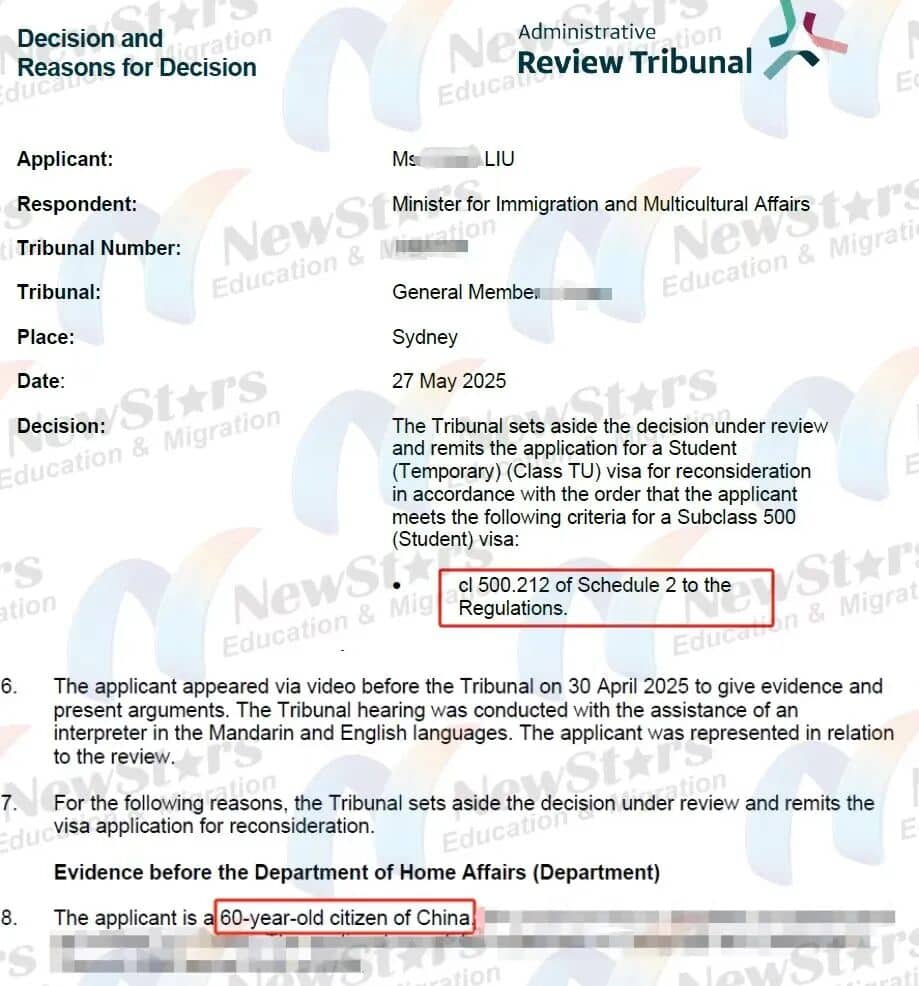
Winning a student-visa appeal even at 60!
An applicant born in 1964 applied for an English-language course, was refused in 2024, and came to us for help with the appeal. Late last month we accompanied the client to the hearing, and through the supplementary evidence and the hearing itself fully demonstrated the client’s genuine study intentions and detailed post-study return plans — securing a successful outcome!
Student-visa ART appeals — we handle them almost every week, and the cases above are just a few of the more difficult wins. We see every kind of scenario: mature-age students refused and then appealing, applicants refused after multiple previous student visas, and applicants refused because of DIY mistakes — all overturned with our assistance.Throughout the appeal, we make sure the client fully understands every document lodged. The content of the submission is discussed and refined with the client over multiple rounds, and we combine this with the relevant legal provisions to build a well-reasoned, evidence-backed case!
Of course, the best outcome is no refusal in the first place — especially for friends renewing a student visa onshore in Australia: do not assume a grant is automatic or a foregone conclusion, and do not rely on luck. Even if you could, after a refusal, appeal and keep studying onshore, the Department of Home Affairs is steadily raising the cost of trial and error — so from the very start, bring professional matters to professionals.
If you need assistance, please get in touch with us.

(Photo taken in 2021)
“Perth to be removed from the Regional list” — the full story | Who may be affected, and how to respond

Latest skilled-migration data: Subclass 190 and 491 grants continue to accelerate!

Parent-visa Queue Letters arrived in force over the weekend! A fresh look at the 143/103 “queue letter”

Migration News Sharing Group
2025
Step 1: Press and hold to add our client-service contact

Step 2: After adding, please


follow the NewStars WeChat official account

Free preliminary study-abroad and migration consultation
Sydney

Melbourne

Brisbane

Adelaide

Canberra

Hobart

Perth

Beijing

Guangzhou

New Zealand — Auckland