This past week, the news that “Perth may be removed from the regional list” has been circulating widely, and many applicants who are already in Perth or about to head there have been asking us about it. In this article we aim to explain the full background and the potential impact.
The “sudden” news is not actually sudden
The broader context of the regional-area adjustment is Australia’s major skilled-migration reform. Changes to employer sponsorship and the Subclass 858 visa have already been rolled out, and the two big remaining tasks are reforming the points test criteria and, in parallel, the regional-migration reform.,Adjusting the definition of “regional” is one of the confirmed key reform directions.It’s just that the points-test reform has drawn most of the attention until now.
Tracing back: the earliest mention of removing Perth
Looking back through the news, the earliest mention linking regional reform and Perth came from a WA Premier press release in early October. The main thrust of that statement was opposition to the federal government cutting state-nomination allocations, but the closing section noted that Canberra was advancing regional-area reform, and warned that if the reform would harm WA’s ability to attract workers — whether by removing Perth’s regional status or by reducing the competitiveness of Perth applicants under a revised points test — WA would oppose it.So at least by that point, the issue was being discussed internally, or an early draft of the recommendations had already raised it.
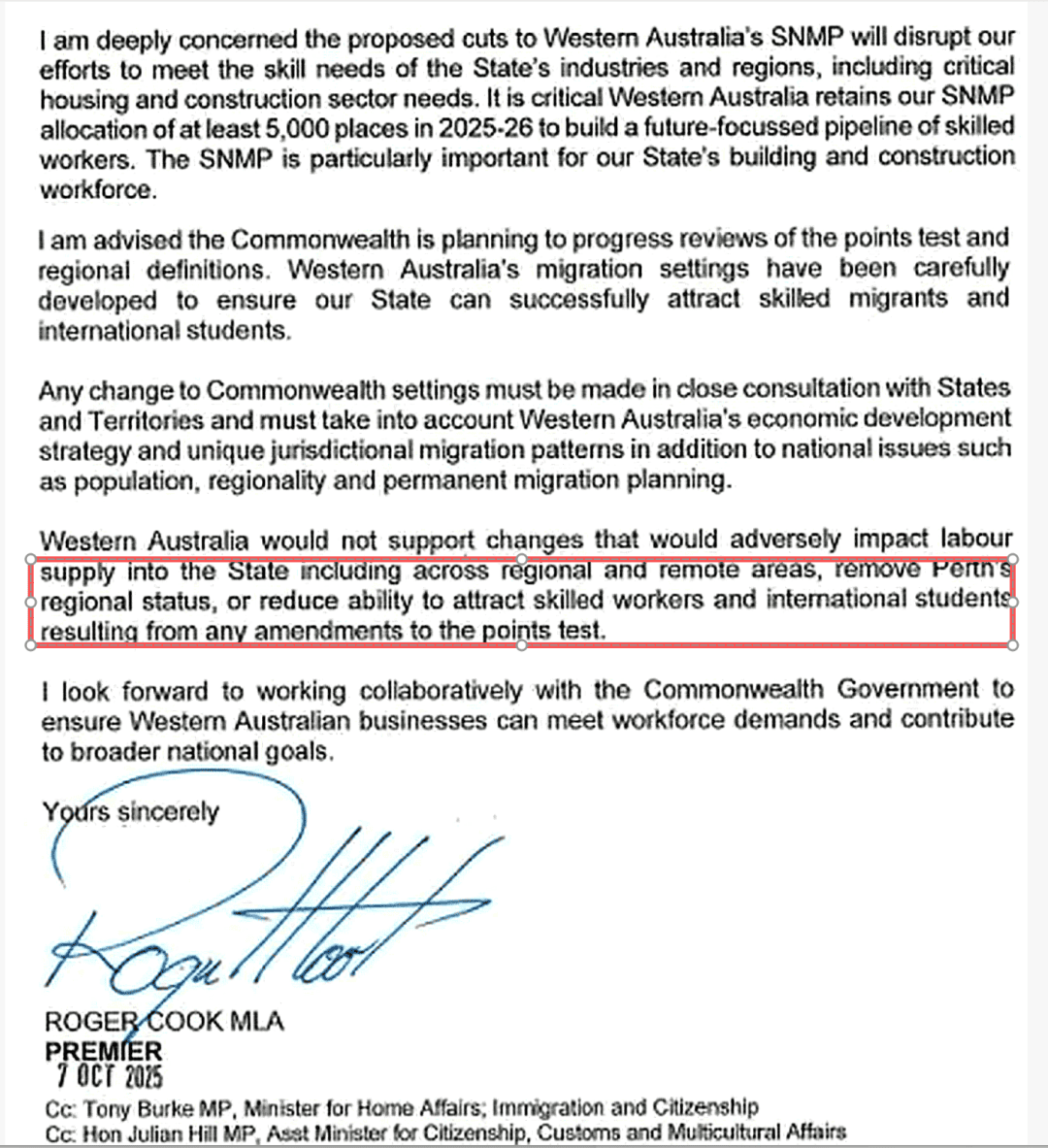
At the time, however, everyone’s attention was on state-nomination allocations — neither applicants nor the industry paid much attention to the regional reform, probably because they felt a fully drafted and implemented version was still some way off.
Later, senior Perth-based MARA-registered agents disclosed at the end of December 2025 that by early 2026 the federal government would receive a fairly complete set of recommendations on both the points test and regional reform.
Attention suddenly spikes
Now, in January, industry peers have suddenly gone all-in advocating for Perth — which likely means the final decision on whether to remove Perth will be reflected in the upcoming report. At least in the current version of the report or recommendations, the outlook for Perth’s regional status is not favourable.
Australia’s regional-area boundaries have been revised several times
If the Department of Home Affairs wanted to amend the definition of “regional”, based on past precedent, a single Legislative Instrument could make it happen very quickly.
The current regional-area framework was largely established in the 2019 reform that replaced the Subclass 489 visa with the Subclass 491 visa. The Liberal government at the time extended the qualifying period for permanent residence but expanded the scope of “regional”: recognising the need for population and skills growth, “urban” areas such as Wollongong, the Gold Coast and Perth were added to the regional list. Regional areas were also split into two tiers — one covering relatively developed cities and regional centres, and another covering the more sparsely populated areas.
In March 2022 the Department expanded the regional-area list further, mainly by adding several suburbs around Brisbane — some only about a 30-minute drive from the Brisbane CBD. There has been essentially no change since then.
What would the impact be? How should you prepare in advance?
1. If Perth is removed, Perth graduates will no longer enjoy the 3-year Temporary Graduate (485) visa concession
If you are a Perth graduate already holding a first Subclass 485 visa, you can now apply for the regional-area second 485 visa,. You don’t need to wait until the first 485 is close to expiring to lodge — once the second 485 is granted you must remain in a regional area. If you’re concerned about being affected, get in touch with us now so we can lodge the application.
2. If Perth is removed, Perth graduates who have not yet been invited will no longer receive regional-area points
As long as you have not yet been invited, your claim is assessed based on the date your EOI is confirmed. Even if Perth counted as regional while you were studying, if new legislation removes it you will no longer be able to claim those points.
3. If the legislation passes, Subclass 491 visa holders granted after that point will no longer be able to live and work in Perth
In theory, existing 491 visa holders already granted and settled in Perth would not be affected — they could keep living in Perth to meet the Subclass 191 visa requirements.
Which locations a 491 / 494 visa holder can live in to meet the 191 requirements is determined by the regional-area definition in force at the moment their visa is granted。
Scenario 1: A’s visa is granted on 1 February while A is still in their home country; at that point, region B is not classified as regional. On 1 April, legislation adds B to the regional list. A enters Australia on 1 May and settles in B — A has settled in the wrong regional area.
Scenario 2: C’s visa is granted on 1 February while C is in region D, which at that time is classified as regional. On 1 April, legislation removes D from the regional list. C can still remain in D to meet the 191 transition requirements.
Please remember: the basic principle is that the legislation’s effective date must correspond to the visa grant date. Keep in mind that the Department of Home Affairs website is sometimes slow to update.
For more detail, please see: Subclass 489 / 491 holders — don’t settle in the “wrong” place! Different 489 / 491 grants map to different regional areas — the Department has confirmed the rules!
4. If Perth is removed, employer-sponsored applicants in Perth will no longer be able to apply for the Subclass 494 visa
Perth would be left with only the Subclass 482 and Subclass 186 visas, like Sydney, Melbourne and Brisbane. On top of that, 482 / 186 processing in Perth is currently faster than in the three major cities — a regional-area benefit that may also disappear.
5. However, this does not mean Perth can no longer receive 491 invitations
Looking at the current policies in Victoria, Queensland and New South Wales, applicants in Sydney, Melbourne and Brisbane can still be invited for the 491. The real difference is that after the 491 is granted, holders would no longer be able to live in Perth — they would need to move to other parts of WA or to regional areas in other states.
Some analysis —
–WA’s population growth for the full year to mid-last year was 65,600, faster than any other state. Of that, overseas arrivals exceeded 40,000, natural increase was close to 15,000, and interstate migration contributed just over 10,000 — along with Queensland, WA is one of only two states with positive net interstate migration, meaning people from the rest of Australia keep flowing into these two states. Queensland, however, has several other cities to absorb that flow, whereas WA has no other population centre outside Perth
–Precisely because of this, WA genuinely needs Perth to attract population — everywhere else in WA is a small town of a few tens of thousands of people at best.Trying to get overseas or interstate arrivals to move to these small towns is extremely difficult. Perth itself is WA’s “shopfront” — people settle in Perth first, then disperse to the rest of the state. On another front, WA is currently inviting many construction workers under the 491 — and the housing-construction shortfall is concentrated in Perth. If Perth is removed, these tradies won’t be able to meet the actual housing-construction demand either.
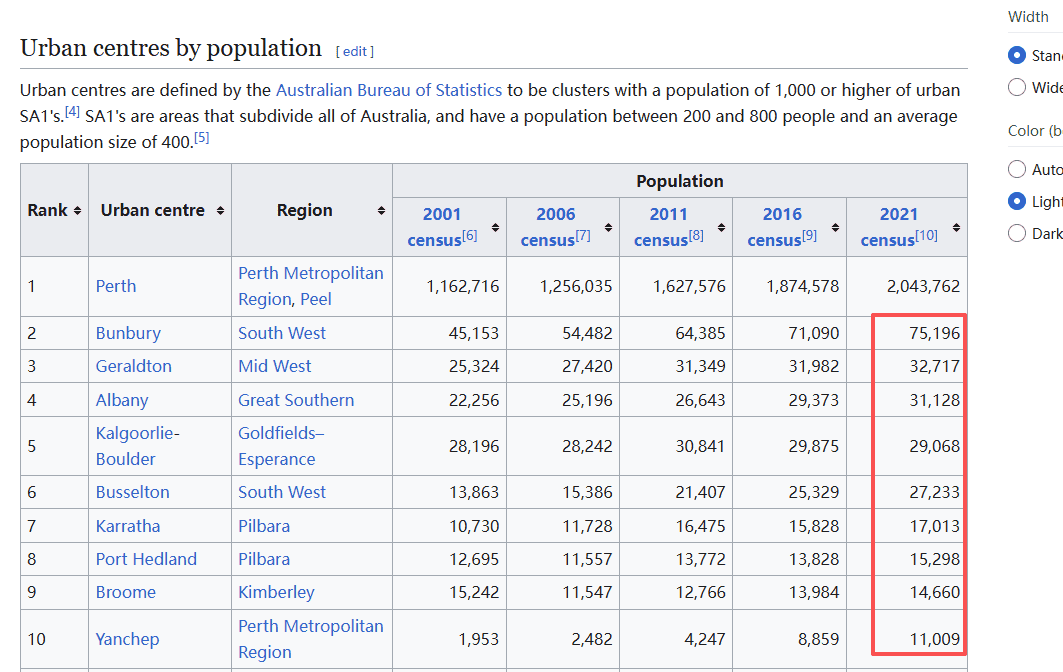
As things stand, the WA government is firmly opposed to the removal, and hopes that pushback from the state government, MPs and the wider community can keep Perth on the regional list.
(Filmed in 2021)
Invitation numbers up — multiple IT invites issued, plus Business, Early Childhood, Civil Engineering and Nursing!

Latest skilled-migration data — 190 and 491 grants continue to accelerate!

Half the financial year is gone and 16,000 places are still unused — lodge your EOI now!

Migration News Community Group
2025
Step 1: Press and hold to add our client service

Step 2: After adding, please


Follow the NewStars WeChat Official Account

Free initial study-and-migration consultation
Sydney

Melbourne

Brisbane

Adelaide

Canberra

Hobart

Perth

Beijing

Guangzhou

New Zealand — Auckland