The two years of COVID dealt offshore applicants their biggest blow by sharply narrowing the pathways to permanent residency in a single step. With investor migration losing the direct PR pathway under the Subclass 132 stream, and points requirements for Subclass 189 and 190 Skilled visas climbing steadily higher,offshore applicants who still want tosecure Australian PR with a lower English scoreand without relocating to Australia— beyond theGlobal Talent (NIV) visa— now have essentially one major pathway remaining:employer sponsorship.
To learn more about the Global Talent (NIV) visa, visit:
This financial year,
employer sponsorship is thriving across the board!
In the 2021–22 financial year,the grant data for Subclass 482/457 nomination occupations across all states,reached 22,790 approvals as at 31 March 2022.

In the 2022–23 financial year,the Employer Sponsored category allocation will rise to 30,000 places,with additional quotas available for regional employer sponsorship,making the overall Employer Sponsored category quota still the largest within the skilled migration programme.On top of that, both now and for the foreseeable future,employer-sponsored applications are given high processing priority by the Department of Home Affairs.

See the PMSOL priority processing stream attached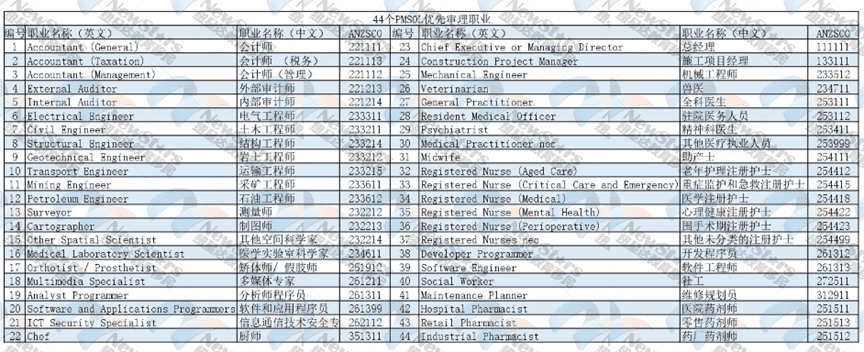
So, with such a stable migration policy framework,if you have solid work experience onshore,act now during this window of opportunity — contact us for an assessment!

Among the latest 2022 success stories,there is much to learn from,as our clients come from very different fields and industries. Why did they ultimately choose employer sponsorship, and how did they successfully obtain Australian PR?Let me walk you through it all.

Case Study One
Client: Mr H
Visa: Subclass 186 Employer Nomination Scheme visa
Occupation: 263111 Computer Network and Systems Engineer
Challenge:
When lodging the visa application offshore, Mr H’s wife was pregnant and unable to complete the health examination; they had to wait until after the breastfeeding period before proceeding.After more than a year of waiting, the case officer developed serious doubts about whether the employer still intended to hire the applicant and whether the employer’s current business circumstances still qualified them to sponsor.Ultimately, our migration agents and lawyers supplemented dozens of additional documents, addressing the case officer’s concerns and successfully securing this hard-won visa for our client.
At the time, we estimated 12–18 months for the visa to be granted. Subsequently, due to COVID, employer sponsorship entered a fast-track processing phase, and the early stages of the case progressed very smoothly — we lodged the nomination and obtained nomination approval without any issues.It is worth noting that after the COVID outbreak in 2020, the Department of Home Affairs published the PMSOL list, and occupations within it — including IT, engineering, and accounting — seemed to enjoy near-miraculous processing speeds, with invitations issued within roughly 2–3 months and visas granted within about 1 month.Our in-progress cases were moving at remarkable speed, and we placed even greater hopes on this particular case.
Although many clients who had applied six months or even a year after Mr H had already received their visas, although this case truly embodied the saying that good things take time, the outcome was positive in the end. The journey had its share of setbacks, yet it made the result all the more rewarding.

Case Study Two
Client: Mr C
Visa: Subclass 186 Employer Nomination Scheme visa
Occupation: 221113 Taxation Accountant
Challenge:
Demonstrating why the employer needed to hire an offshore employee — a common pain point for business and commerce professionals migrating to Australia
After circling between Subclass 189 and Subclass 190 Skilled visas for some time, but hampered by the prolonged skilled migration drought for the accounting profession with no invitations being issued,he ultimately chose the employer sponsorship pathway, accumulating three years of taxation accountant work experience through a Subclass 485 Graduate Work visa and full-time employment.With the assistance of our migration agent and legal team, the nomination and visa were lodged in November 2021, and both nomination and visa were successfully approved on 26 April 2022.

Case Study Three
Challenge:
Working as a General Accountant at a construction-related company — whether the company had the qualifications to provide sponsorship
Ms Z had previously been concerned about whether working as an accountant at a commercial company would qualify for an employer-sponsored visa.After our thorough assessment, we concluded that the employer’s solid financial statements and steadily growing business volume were indeed sufficient to sponsor an offshore accounting employee,with the contract signed in July 2021, the nomination and visa lodged on 3 August 2021, the nomination approved on 12 February 2022, and the visa approved on 20 April 2022.The steady granting of employer-sponsored visas has undoubtedly given accounting professionals a much-needed confidence boost, offering applicants who have waited years for a skilled migration outcome a reliable and expedited pathway!
Case Study Four
Challenge:
Demonstrating why the employer needed to hire an offshore employee — a common pain point for business and commerce professionals migrating to Australia
Ms L was also among those who had spent the past two years waiting patiently for a Subclass 189 or Subclass 190 Skilled visa invitation. Despite having a relatively high EOI score, there was no viable pathway, and so at the start of this year she confirmed her decision to pursue the employer sponsorship route. With only two years of work experience at that stage,we recommended applying for the Subclass 482 Skills in Demand visa first, and once her work experience reached three years, she would be eligible to lodge a Subclass 186 Employer Nomination Scheme application.The employer is an accounting firm. The contract was signed in January 2022, the nomination was lodged on 10 February, nomination approval was granted on 1 March, and the visa was approved on 11 April. Thanks in large part to the employer’s cooperation, the entire process from signing to visa grant took just three months. In a few more months, she will be able to apply for the Subclass 186 Employer Nomination Scheme visa.

If you are still navigating the complexities of Australian migration and weighing up the pros and cons of skilled migration versus employer sponsorship, please bring your CV and get in touch with us promptly. Tiffany will provide you with a detailed assessment of the pathway that best suits your situation!

This Week’s Feifan English News
Click the image to read the full article
Previous Editions

The first state nomination policy for the next financial year has been announced — is there quota growth on the horizon?!

“Will IT professionals still have a chance at invitations in the new financial year?!”

Labor takes office — will migration policy improve?

Warned about extending your visitor visa? What other options are there to keep your parents in Australia long-term without the hassle?

Migration Information Sharing and Q&A Group

Step 1: Press and hold to add our customer service

Step 2: After adding,


Attention!Please verifygenuineNewstars consultants!











Recommended fields of study for migration — suitable for all!Click ‘Original Link’to learn more!