This
Issue
Australia Study Abroad Weekly
by Claudia
Hello everyone, the Study Abroad Weekly is back again — this edition is written by education consultant Claudia.
This Week’s Highlights
1. IT, engineering, healthcare and many other graduates to receive longer Subclass 485 — at least 4 years!
2. ANU Spring Recruitment Express: prepare for career day and launch your professional journey!
3. Job-seeking guide for international students in Brisbane
4. 100 years of the University of Western Australia
5. UTS student FAQ handbook
6. Multiple countries lift restrictions on Chinese travellers
7. University of Sydney parent information session & networking luncheon
Engineering, IT and healthcare graduates
to receive at least 4 years on the Subclass 485
NO.1

Last October, the Australian Government confirmed that graduates in certain fields would be eligible for a longer Subclass 485 Graduate Work visa:
Bachelor’s graduates: from 2 years to 4 years
Master’s graduates: from 3 years to 5 years
All doctoral graduates: from 4 years to 6 years
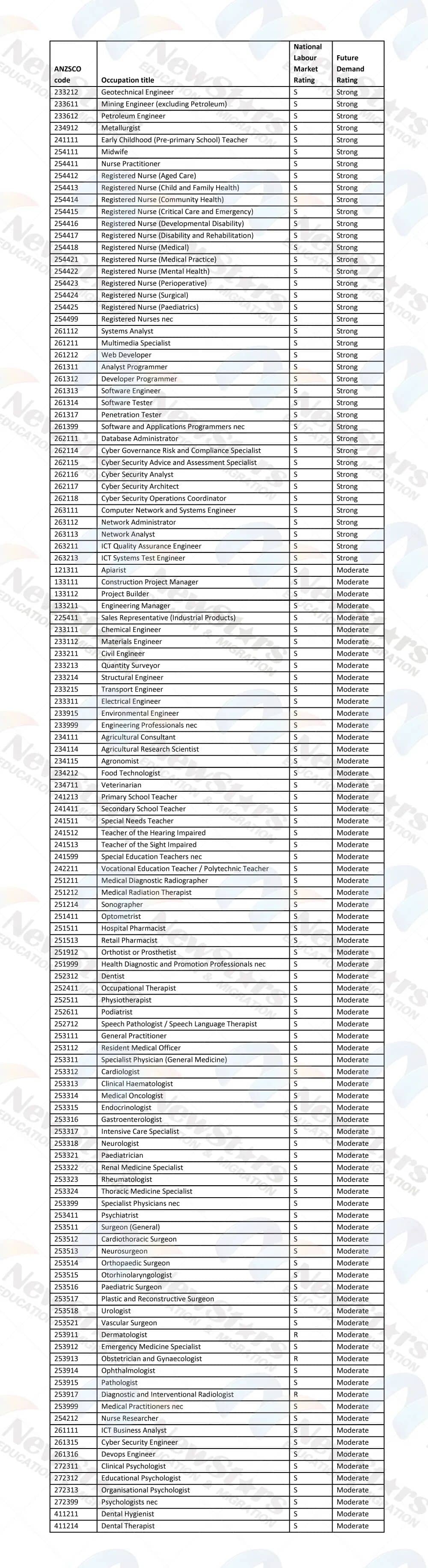
This week, the specific eligible fields were announced, along with confirmation that theimplementation date is 1 July 2023. This means that ifyou are currently studying in Australia, about to start a new semester, or planning to study in Australia in the future — and your field and programme meet the requirements — you are on track for at least 4 years on the Subclass 485!
And this is a long-term policy!
The full list of eligible fields is shown in the image below. Before 1 July, the Government will also releasethe specific CRICOS course codes, which will make it straightforward to confirm whether your course qualifies.For more FAQs on this topic, see:New Subclass 485 changes give more people an extra 2 years — expired, current holders and those who stayed through COVID all eligible! Top 8 FAQs answered!
ANU Spring Recruitment Express — All Aboard
Launching Your Career Journey
NO.2

In the blink of an eye, the annual spring recruitment season is almost here. Soon-to-be ANU graduates — are you ready?
If you haven’t prepared yet, don’t worry — we’ve got you covered!
The ANU China Centre has invited 5 leading companies:
CITIC Securities (CITICS)
BOE Technology
IBM
KPMG
miHoYo
to deliver 5 exclusive spring recruitment sessions for ANU graduates.
By joining this online Spring Recruitment Express, you will gain:
1 A comprehensive breakdown of spring recruitment processes across different industries, application and interview tips, and must-have workplace skills
2 In-depth insight into the company cultures, industry insights and first-hand inside information from the organisations that interest you
3 Direct access to HR teams from leading companies to answer all your job-search questions
4 The chance to visit and experience company office environments in person (note: CITIC Securities and miHoYo will offer in-person site visit opportunities)
Event Schedule:
[Online/In-person] CITIC Securities (CITICS)
(28 February 2023, 14:00–16:00, Beijing time)
[Online] BOE Technology
(6 March 2023, 14:00–15:30, Beijing time)
[Online] IBM
(15 March 2023, 14:00–15:30, Beijing time)
[Online] KPMG
(22 March 2023, 14:00–15:30, Beijing time)
[Online/In-person] miHoYo
(29 March 2023, 14:00–15:30, Beijing time)
Job-Seeking Guide for International Students in Brisbane
NO.3


Finding your first job is no easy feat — but with the right guidance, you as an international student can absolutely succeed.
We spoke with Dr Dino Willox, Head of Employability at the University of Queensland, for his best advice.
1. Your university experience is your portfolio
“One of the biggest obstacles current students and recent graduates face is that they don’t have much practical work experience to demonstrate their skills to prospective employers,” Dr Willox said. “Students can put examples from their studies into a portfolio.”
“Pull together the projects you worked on during study or placements — not only does this prove to interviewers that you have the skills they need, it also gives you easier examples to draw on when you’re under pressure in an interview.”
At the University of Queensland, many programmes use Work-Integrated Learning (WIL) to help students gain workplace experience and develop employability. WIL experience can also strengthen your CV. We recommend reaching out directly to your school or student employability team to discuss available opportunities.
2. Use your network to find work
You can use common job sites such as SEEK and LinkedIn, but Dr Willox explains that many opportunities actually come from the networks you already have. Many “hidden jobs” that are never publicly advertised can be accessed through word of mouth and people who know your skills. Having someone who can recommend you when they hear of an opening is invaluable.
“One of the best things international students can do is get involved in university or college clubs and societies — it dramatically expands their social network and improves language skills,” Dr Willox said. “Many jobs are never advertised, so in the current environment these networks are incredibly important.”
3. Stay across the skills employers value
While you don’t need to worry too much about current skills demand while you’re studying — that landscape changes constantly — it’s worth looking ahead to what skills are likely to be in demand three or four years from now.
“The World Economic Forum is a great resource for understanding the global picture,” Dr Willox shared. “They’ve already published their 2025 outlook. As I mentioned, some skills may become redundant fairly quickly, so this resource is very useful for our students.”
According to the World Economic Forum, the following skills will be critical in the near future:
Complex problem-solving
Active learning and active listening
Leadership
Technology design and programming
Resilience, stress tolerance and flexibility
4. Leverage your life experience
Many students — international students especially — feel they need to be perfect. Dr Willox says that is absolutely not the case.
“An interview should be a two-way conversation, not passively agreeing with everything the other person says. If you feel you lack experience, try drawing on examples from your life that demonstrate your qualities and values. All life experience has value — moving to a different country, for example, proves your resilience. Present your past experiences to the interviewer and show them you will keep working hard.”
If you haven’t reached the interview stage yet, try incorporating your unique experiences into your cover letter as examples and use them to demonstrate why you are the best candidate for the role.
5. Be authentic in interviews
In an interview, it can be hard to stand out from a crowded field. But there are still ways to capture a prospective employer’s attention above others.
Dr Willox said: “Employers are also finding it hard to identify the right candidate right now — but you can set aside the tired ‘self-promotion’ pitches they’ve heard a thousand times, and instead try showing them a more authentic version of yourself. That will be a real advantage in the interview.”
6. Be your own boss
Embracing your entrepreneurial spirit is also a great way to earn income and build experience.
“Don’t forget — if you can’t find the perfect job, you can always start your own business!” Dr Willox said.
As an international student, fitting in freelance work or starting a side business around your studies is a worthwhile option. If you have a particular skill set, you can market yourself on Upwork or Airtasker. If you are fluent in a language other than English, why not try teaching it? If you make good use of your hobbies and strengths, you may discover you have far more options than you realised.
7. Contact the UQ Careers team
Sometimes you just need a little help. As an international student looking for work in Brisbane, your first step can be to reach out to the Careers and Employability team for advice. They will guide you on how to make an impact at work, engage with professional development, and build your competitive advantage in the job market.
A Century of Excellence — The University of Western Australia
NO.4

The University of Western Australia (UWA) is a globally renowned top-100 university and one of Australia’s most historic research-intensive institutions — worth exploring carefully by every prospective student.
To help new students better understand UWA, join us as we turn back the clock and walk through a century of the university’s history!
Founded in 1911, UWA was the first university in Western Australia. Its mission is “to promote the prosperity and welfare of the community”, and it opened its doors in 1913 to just 184 students.Today, UWA has more than 25,000 students from over 100 countries.The motto is “Seek Wisdom” — adopted by the UWA Senate in 1912 — and it has guided the university ever since, and will continue to do so into the future. UWA has always been committed to seeking wisdom and continually encouraging its students and staff to push the boundaries of what is known and what is possible.

UWA’s Centenary of Achievement
Over more than 100 years, UWA has made enormous contributions to the intellectual, cultural and economic development of Western Australia, Australia and the world. We have built and strengthened ties with communities, partners and industry to ensure that our impact — now and in the future — is far-reaching and enduring.
1910
Sir John Winthrop Hackett, as Chair of the Royal Commission, proposed the establishment of a university in Western Australia.
1913
The original teaching building was located on Irwin Street, with only 184 students and three schools — Engineering, Science and Arts.
1952
Former Prime Minister Bob Hawke graduated from UWA and was awarded a Rhodes Scholarship.
1983
Former student guild president and UWA alumnus Robert James Lee (Bob) Hawke was elected Prime Minister of Australia (1983–1991), the first Prime Minister to have graduated from UWA.
2005
UWA Professor Barry Marshall and Honorary Professor Robin Warren, a pathologist at Royal Perth Hospital, were awarded the 2005 Nobel Prize in Physiology or Medicine for their discovery of Helicobacter pylori.
2016
Professor David Blair led UWA scientists as part of an international research team to achieve the world’s first detection of gravitational waves.
2020
The Bilya Marlee building (meaning “Swan River”) brought Indigenous studies to the heart of our campus, and the EZONE UWA Student Hub provides world-class learning spaces for students, researchers and industry in engineering and mathematical sciences.
Western Australia currently offers excellent study and migration pathways — contact us to plan your UWA programme and major!

UTS Student FAQ Handbook
NO.5

Essential Information for New Students
For questions aboutstudent account setup, email login, commonly used software and system access, the key information is summarised below:

UTS Student Support

University Contact Details
Contact the UTS Student Centre
Phone: 1300 ASK UTS (1300 275 887)
+61 2 9514 1222 (outside Australia)
Submit an online enquiry:
www.uts.edu.au/current-students/contacts/uts-student-centre
Address: UTS Building 10
Contact the UTS International Student Centre
Phone: +61 2 9514 1531
Email: internationalstudent@uts.edu.au
Website: international.uts.edu.au
Address: UTS Building 1, level 3A
Emergency Contacts in Australia
Emergency: 000
Police assistance: 131 444
Campus security: dial 6 from any campus phone, or 1800 249 559
Multiple Countries Lift Restrictions on Chinese Travellers
NO.6

Over the past six months, the COVID situation has been a rollercoaster — and that rollercoaster is finally getting back on track, with one piece of good news after another!
Recently, many countries have lifted their COVID entry restrictions on Chinese travellers. Not only have flight numbers surged, but airfares between China and Australia have finally seen a dramatic drop,
A number of countries have recently revised their border management policies and eased restrictions previously imposed on travellers from China:
France:From 16 February 2023, travellers arriving from China no longer need to present a negative PCR test result taken within 48 hours, and random testing upon arrival in France has also been scrapped.
Switzerland:Travellers from China are no longer required to undergo mandatory COVID testing.
Sweden:From 18 February, temporary restrictions on travellers entering from China have been removed.
EU: On 16 February local time, Sweden, holding the EU Council Presidency, issued a statement that, given the latest developments, all 27 EU member states had reached consensus to begin gradually removing COVID entry requirements for travellers from China. By the end of February, the requirement for a negative COVID test within 48 hours before departure would be phased out; random testing would be “progressively lifted” by mid-March.
Italy:On 31 January local time, the Italian Ministry of Health decided to ease entry restrictions on travellers from China. From 1 February, mandatory PCR testing for travellers from China was replaced with “random testing”.
Regular Passenger Services Resume
Between China and 58 Countries
NO.7

During the three years of COVID restrictions, many international students and overseas workers went years without returning home, due to circuit-breaker flight suspensions, high airfares and quarantine requirements. Since countries began easing their China entry controls, demand for outbound travel has exploded — Chinese nationals travelling to study, work, visit family and tour are everywhere, and the good news keeps coming.
At a 16 February press conference held by the Civil Aviation Administration of China (CAAC), media were informed thatbetween 6 and 12 February, China had resumed regular passenger services with 58 countries, with 98 Chinese and foreign carriers operating a combined 795 flights — up 65% from the week before the “Class B Managed” policy announcement!

Of these,flights between China and six Asia-Pacific nations — Thailand, Cambodia, Australia, Malaysia, Singapore and Vietnam — surged by a combined 226 flights, accounting for over 70% of the total increase!
For those in Australia eager to know about China–Australia resumptions, the situation is looking very positive. Direct flights between the two countries were previously scarce —but direct China–Australia flights have now recovered to over 80 per week!
University of Sydney Parent Information Session & Networking Luncheon
NO.8

On the morning of 21 February, the University of Sydney held its first parent information session for the new semester (online). A number of parents from across China attended the University of Sydney China Centre’s Suzhou office in person, joining the online session alongside China Centre staff.
At lunchtime, the University of Sydney China Centre also invited distinguished alumnus Bruce Lu and recent graduate Erin Hu to attend an in-person networking luncheon, where they answered parents’ questions.

The University of Sydney parent information session aimed to provide parents with a comprehensive overview of campus support services, campus life and the student experience, and to collate key questions from parents for feedback to the relevant university departments.
During the session, the China Centre connected live with University of Sydney academic Dr Jinqi Xu, student support services staff member Stephanie Whiley and PSA student volunteer Tian Qian, covering topics including pre-arrival preparation, on-campus safety and health, academic life and employment support, in a bilingual online exchange.
In addition to learning about the range of student support services offered by the University of Sydney, the session gave parents the opportunity to engage directly with University staff.

On the topic parents care most about — internship and employment prospects for their children — the University of Sydney Career Centre provides employment support services for students seeking work in Australia, while the China Centre provides relevant career support in China for students planning to return home.
Since 2021, the University of Sydney China Centre has run the University of Sydney “Sydney Careers” China Internship and Campus Recruitment Programme. Applications for the 2023 programme are expected to open in June–July 2023.

Australian University Offer Show



Con
sult
Study Abroad · Progression · Transfers
Contact Claudia
for a personalised plan

Past Recommendations — Click image to read article

Competitive salary + full training + a broad platform — we’re just missing you!

New Subclass 485 changes give more people an extra 2 years — top FAQs!

NSW auditors can use accounting PY points! Subclass 491 becomes near-barrier-free
NSW auditors can use accounting PY points! Subclass 491 becomes near-barrier-free
NSW auditors can use accounting PY points! Subclass 491 becomes near-barrier-free
NSW auditors can use accounting PY points! Subclass 491 becomes near-barrier-free
Migration Information Group
2023
Step 1: Press and hold to add our customer service contact

Step 2: After adding, please


Study Abroad · Migration · Visas — We Are the Specialists



Attention!Please verifygenuineNewstars consultants!

Study Abroad & Migration Enquiries — Local Representatives

Sydney

Melbourne

Canberra
Brisbane

Adelaide

Hobart

Beijing

Guangzhou
Follow the Newstars WeChat Official Account
Reply in the Official Accountwith the following numbers or any keyword below (not in the article comments section)to receive the most up-to-date and expert migration information!Reply [A] to view the index (covering all topics)!
Reply:0000 → November 16 policy update (Subclass 491 + skilled migration points)
Reply: 000 → Latest visa / citizenship processing wait times
Reply: 001 → Latest Subclass 189 EOI official round results
Reply: 002 → Subclass 189 Skilled Independent migration
Reply: 003 → Subclass 190 state nomination by state
Reply: 004 → Subclass 489 regional state nomination
Reply: 005 → Student entrepreneur and investor migration
Reply: 006 → Parent migration visas
Reply: 007 → Employer-sponsored visas
Reply: 008 → Subclass 485 visa
Reply: 009 → Partner migration / points bonus
Reply: 010 → Work experience points
Reply: 011 → PY points bonus
Reply: 012 → NAATI/CCL points bonus
Reply: 013 → Regional points bonus
Reply: 014 → Visitor visa / family visit visa
Reply: 015 → Working Holiday visa
Reply: 016 → TAFE study
Reply: 017 → Australian international students migrating to Canada
Reply: 018 → Subclass 407 Training visa
Reply: 019 → Subclass 408 Temporary Activity visa
Reply: 020 → New Zealand migration
2023 Recommendations


Backlog reduced by 400,000 at year-end! Temporary-to-permanent pathway a key reform focus?Click “Read Original” for the Migration Weekly — video edition