One Guide Is All You Need! The Complete 2025 Australian Partner Migration Playbook — Document Preparation + FAQ Answered~


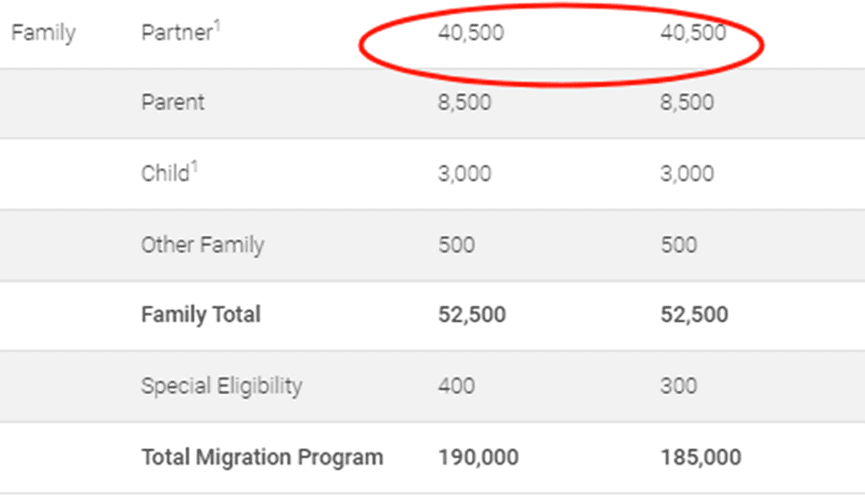
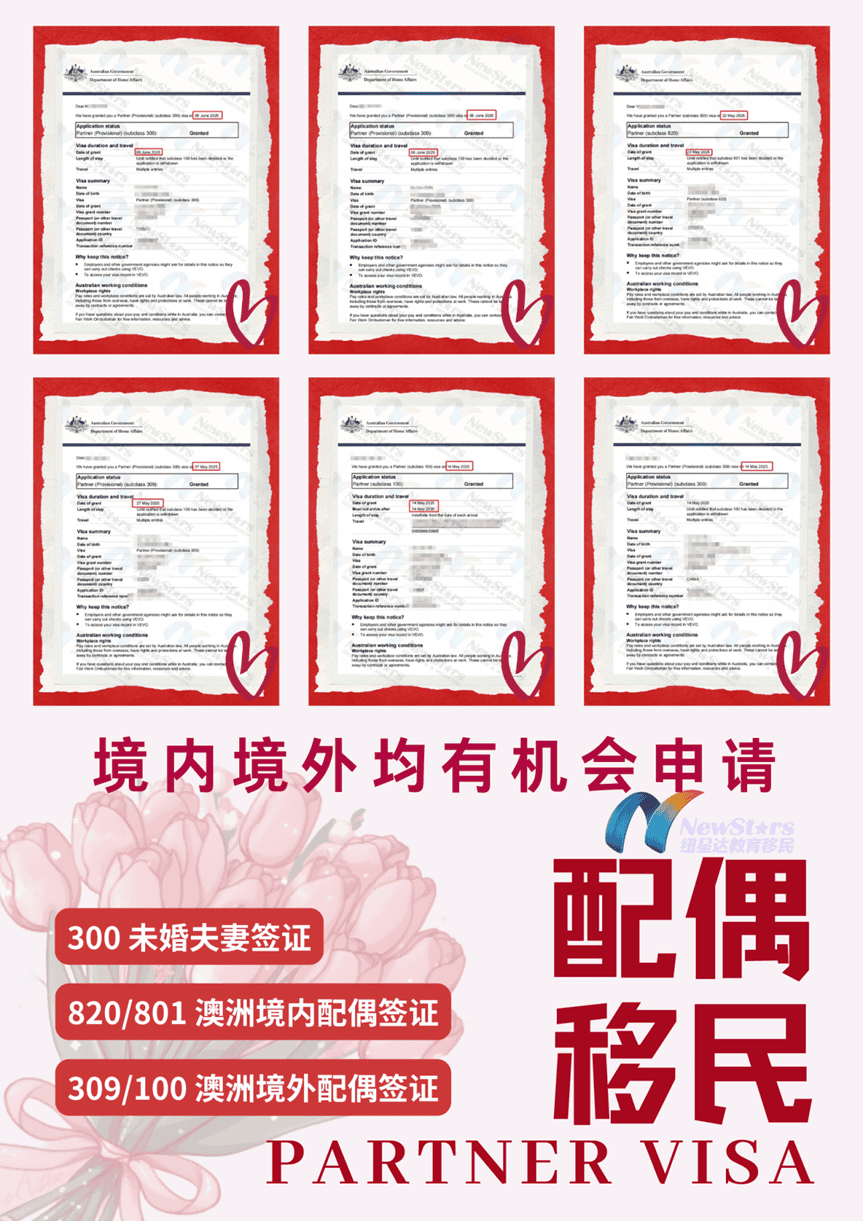
Over the past six months, a large number of skilled migration applicants have had their permanent residence (PR) visas approved one after another. Recently, we have received a steady stream of enquiries about arranging Partner migration for a spouse, with many applicants currently separated from their partner by long distance and enduring the challenges of a long-distance relationship.At present, the annual Partner migration quota has remained steady, sitting at around 40,000 places for each of the past two financial years.


Australian Partner migration video introduction


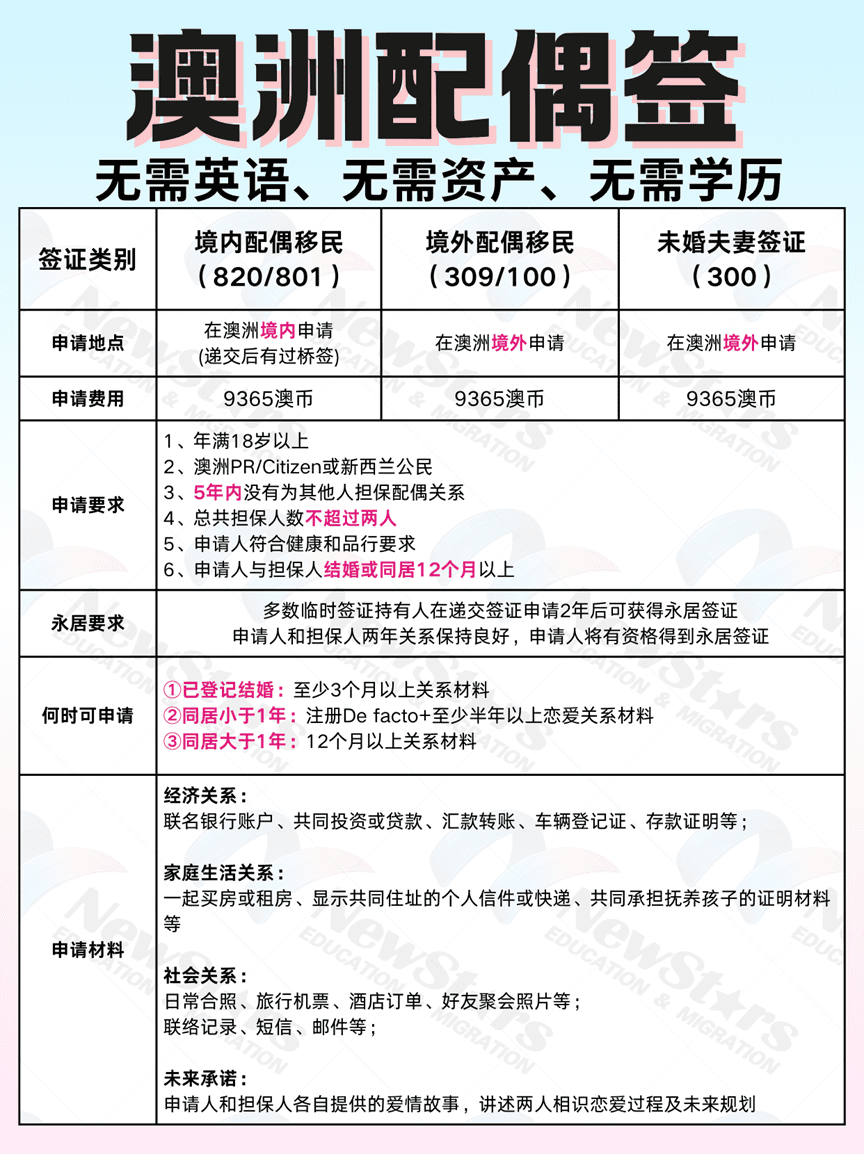
Australian Partner MigrationSponsorRequirements


I. Basic conditions

Residency status:The sponsor must be an Australian citizen, permanent resident, or an eligible New Zealand citizen.

Age requirement:The sponsor must be at least 18 years old; if under 18 years old, they must reach the legal age before registering the marriage.

Limit on number of sponsorships:A sponsor may provide Partner migration sponsorship no more than twice in a lifetime. If the sponsor themselves obtained their status through Partner migration, or if a previous sponsorship application was not approved, those instances do not count towards the two-sponsorship limit.

Waiting period between sponsorships:At least 5 years must pass between two sponsorships. In certain circumstances, however, this can be waived — for example, if the former spouse has passed away, where there has been abandonment of a minor child, or where the sponsor and the current partner have established a long-term, stable de facto relationship and have children together.


II. Character requirements
The sponsor must provide a police clearance certificate confirming that they have no record of family violence or other serious criminal offences. If any adverse record exists, we strongly recommend engaging a professional migration consultant so that a reasonable explanation and supporting documentation can be prepared for the specific circumstances.


Australian Partner MigrationApplicantRequirements


I. Basic conditions

Residency status and age:The applicant must be at least 18 years of age. Their marital status may be married, unmarried, or in a de facto (cohabiting) relationship.

Genuineness of the relationship:The applicant must have a genuine, continuing and stable spousal relationship with the sponsor (an Australian resident who meets the criteria above). The supporting evidence required depends on the nature of the relationship:

Married applicants:A valid marriage registration certificate must be provided.

De facto (cohabiting) applicants:At least 12 months of continuous cohabitation evidence must be provided, together with proof that the relationship remains genuine at the time of application.


II. Character and health requirements
The applicant must submit police clearance certificates from every country in which they have previously resided, confirming good character and no serious criminal record. They must also meet the health standards set by the Department of Home Affairs.


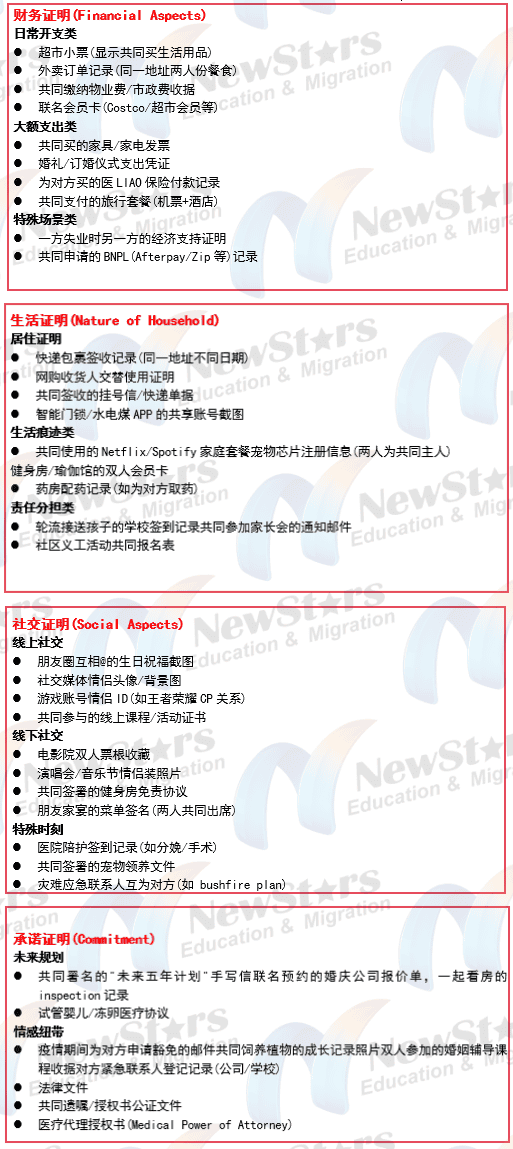
Four core documents the Department of Home Affairs looks closely at


Partner migration applications demand an extremely high level of completeness and consistency in the supporting material. Any oversight or contradiction can prompt the Department of Home Affairs to question the genuineness of the relationship, and may even result in a refusal. We strongly recommend engaging a professional migration consultant throughout the preparation process tostructure the documentation according to your individual circumstances, ensuring clear logic and comprehensive evidence.


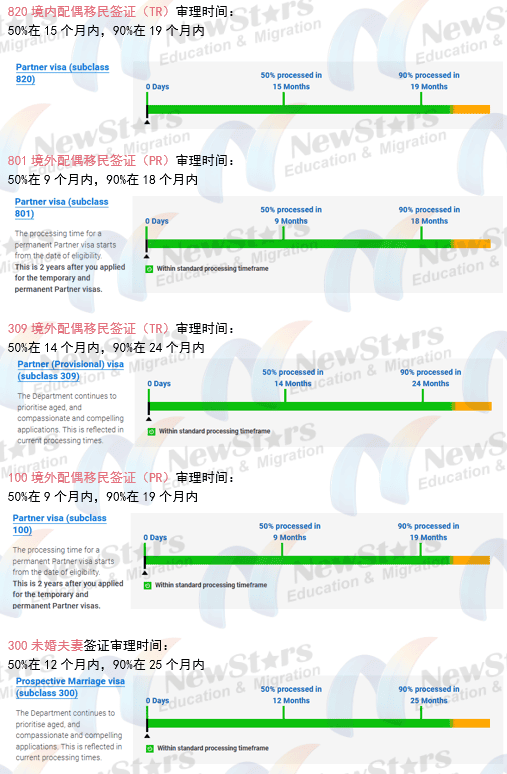
Partner migration processing times


Australian Partner Migration — frequently asked questions

1.After a refusal onshore in Australia, can I still lodge a Partner visa application?
Yes. Most visas cannot be lodged again onshore following a refusal, but the Partner visa is an exception. That said, because the circumstances are complex, we recommend contacting us for an individual assessment.


2.In what circumstances can the 801 permanent visa be granted early?
Generally, this is based on the following principles:

Protecting your interests:for example, where the sponsor has committed family violence against the applicant during the relationship, or where the relationship has ended but issues involving the care of children remain.

Long-standing relationship:where the parties have been in a spousal relationship for 3 years or more, or where the relationship has lasted more than 2 years and the parties have children together.


3.Is a de facto relationship certificate (Defacto Certificate) mandatory?
Not necessarily. If you can provide sufficient evidence of continuous cohabitation for more than 12 months (such as joint bills, rental agreements and similar documentation), obtaining the certificate is not compulsory. The certificate primarily deals with legal recognition of the relationship; if there are no concerns such as property division, obtaining one can serve as strong supporting evidence.


4.Does applying for a 820 visa require a full 12 months of relationship evidence?
If the marriage has been registered, 6 months of relationship evidence is usually sufficient. However, the longer the relationship has lasted and the more comprehensive the supporting evidence, the stronger the application — which can sometimes even shorten the processing time.


5.Is an English test result required for a Partner visa application?
Under current policy, there is no English language requirement.


6. Does getting married guarantee the visa will be granted?
Not necessarily. A marriage certificate is only one piece of evidence of the relationship and does not guarantee approval. In recent years, the Department of Home Affairs has tightened its scrutiny of the genuineness of relationships. Even where the relationship is real, inadequate supporting material can still raise questions and lead to a refusal. We strongly recommend organising your documentation systematically, or engaging a professional team to assist with preparation.


7.What happens if the relationship breaks down during the temporary visa stage (820/309)?

Scenario 1: the relationship ends before the permanent visa (801/100) is granted

You have a legal obligation to notify the Department of Home Affairs immediately. Because the end of the relationship means you no longer meet the basic requirements of the visa, your application will be refused (if a decision has not yet been made) or the visa will be cancelled (if the temporary visa has already been granted).

Scenario 2: the relationship ends because of family violence

This is an important exception. Even if the relationship has ended, you may still be eligible for the permanent visa so long as you can demonstrate that you or a member of your family unit was a victim of family violence during the relationship. You will need to provide the corresponding statutory evidence, such as court orders, medical reports, or psychologist reports.


8.After lodgement, can we travel overseas?

For onshore 820 applicants:

to depart Australia while your application is pending, you must apply for and be granted a Bridging Visa BBridging Visa B); otherwise your Bridging Visa A will cease and you will not be able to return to Australia.

Plan carefully before departing and make sure the BVB remains valid before your return date to Australia.

For offshore 309 applicants:

applicants: because the application is lodged offshore, you may travel as normal during the processing period, but you must ensure you can receive correspondence from the Department of Home Affairs promptly (including requests for further information), and you must notify the Department of any change in your travel arrangements.


9.While the application is being processed, can the applicant work or study in Australia?

For onshore 820 applicants:

Once your 820 application is lodged, you will be granted a Bridging Visa A. While you wait for a decision, this Bridging Visa typically carries full rights to work and study.

For offshore 309 applicants:

You have no right to work or study in Australia until the visa is granted.309 visa itself is a permanent residence visa that allows full-time work and study, but you must be granted the visa and enter Australia before those rights are activated.


10.If the sponsor has previously been sponsored themselves, does that affect things?

Yes — it goes to the eligibility limits that apply to sponsors:

Waiting period between sponsorships: a sponsor generally has only two opportunities in a lifetime to sponsor a partner, and at least 5 years must pass between the two sponsorships.

Key point: if the sponsor themselves obtained permanent residence through a Partner visa, they cannot sponsor a new partner within / years of becoming a permanent resident. This rule is designed to prevent abuse of the Partner visa programme.5


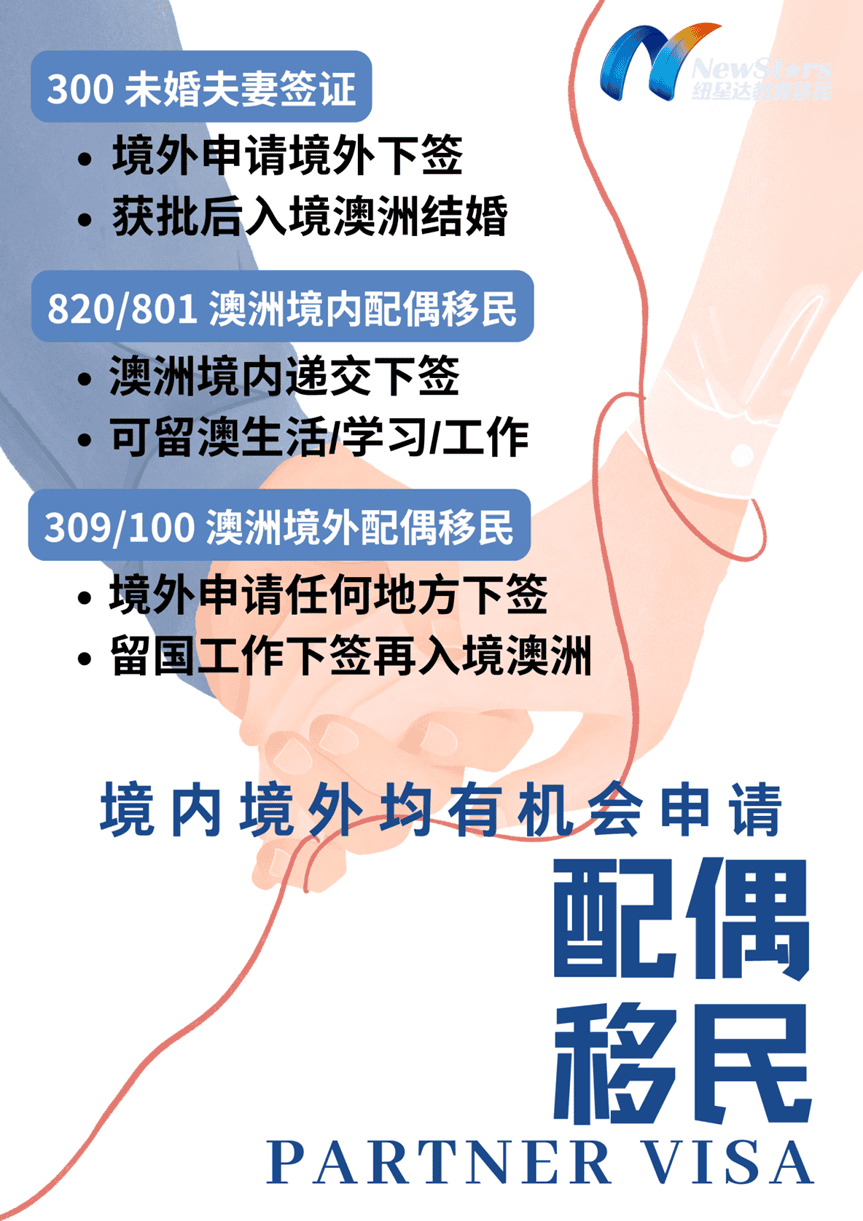
If you and your partner are currently exploring Partner migration and are uncertain which pathway is right for you, bring your circumstances to us and get in touch — we’ll provide a detailed assessment of the migration option that suits you best!


NewStars Group introduction video


(filmed in 2021)

Tasmania opens ROI on 10 October! All occupations on the full list are eligible! Priority for local graduates and long-term residents!


Canberra formally revises its occupation list — a major reshuffle! Victoria issues its first round, with invitations going to Accounting, IT, Civil Engineering and Early Childhood Education!

This financial year’s first state-nominated occupation list is here — Civil Engineering, Construction, the ‘Three Treasures’ trades, IT, services and more — and the priority construction occupations have been unveiled!

Migration news group


2025


Step 1: press and hold to add our consultant

Step 2: once added, please

follow the NewStars official WeChat account


and in the chat window [search by the reference number only] to view the article
No. 01 — Australia’s most popular skilled migration programmes: 189 / 190 / 491
No. 02 — One-stop work-to-migration employer sponsorship: 482 / 186 / 494
No. 03 — Study first, migrate later: recommended courses and fields of study
No. 04 — High school / Gaokao / undergraduate study pathways
No. 05 — Essential for international students migrating: the 485 Temporary Graduate visa
No. 06 — Arrange as soon as PR is granted: Parent migration and visas
No. 07 — Master of Marriage: Partner migration
No. 08 — Pivot to Hong Kong: the Quality Migrant Admission Scheme and the Admission Scheme for Mainland Talents and Professionals
No. 09 — Essential for parents, family and friends visiting: the 600 visa
No. 10 — Weekly updates on grants, invitations and skills assessments: our success stories


Ask

Free initial study-abroad and migration consultation  

Sydney

Melbourne

Brisbane

Adelaide

Canberra

Hobart


Perth

Beijing

Guangzhou

Auckland, New Zealand

Leave a comment