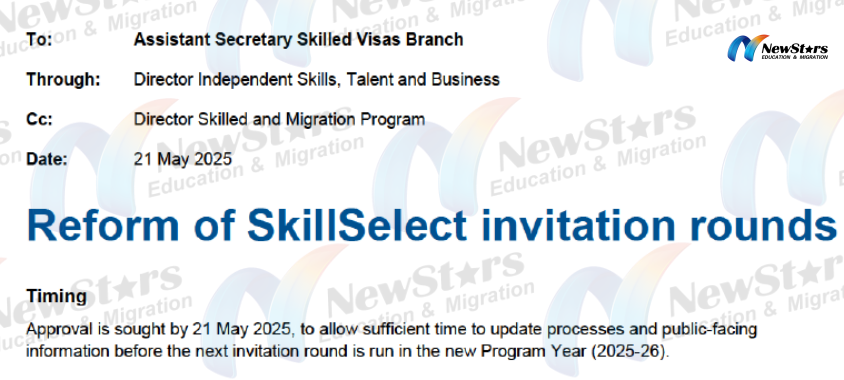
The Department of Home Affairs discussed reforms to its Subclass 189 invitation strategy internally in May this year. We have obtained the latest meeting minutes through FOI. The reform proposal was approved before May and has been used for invitations since the start of the 2025–26 financial year. The first two rounds of this financial year have both followed it.
Longstanding problems with Subclass 189 invitations
Invitation acceptance rates
During the pandemic, the acceptance rate for Subclass 189 invitations—the proportion of invitees who actually lodged a visa application—fell as low as 30–40%, prompting the Department to adjust the frequency and number of invitations. After the pandemic, acceptance gradually recovered to 70% (is it really that high?). The Department therefore believes it is now time for a review.
Invitations cannot be guided solely by the priority occupation direction
In more recent years, invitations have mainly gone to priority occupations such as healthcare and teaching because of the ministerial direction under s499. However, s499 was not intended to guide invitations. To meet each financial year’s KPIs, invitations would be extended to non-priority occupations, but this was an ad hoc response rather than a systematic approach. Previously, there was therefore no formal policy framework or operational guidance underpinning the Subclass 189 invitation strategy.
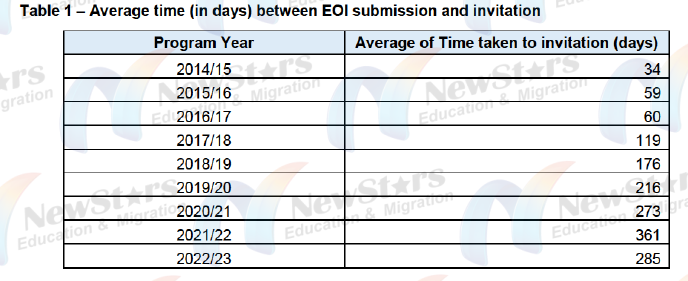
Longer waits for invitations
The data in this document only goes up to the 2022–23 financial year, when the wait from lodging an EOI to receiving an invitation was more than half a year.
State governments are also unhappy with unpredictable Subclass 189 invitations
Beyond the stated aim of making Subclass 189 invitations transparent and fair, state governments have repeatedly asked the Department for greater transparency about invitation timing and priorities. In the 2022–2023 financial year, 87% of Subclass 189 applicants had also lodged EOIs for Subclass 190/491.
In other words, this led to many duplicate, wasted invitations, while people still waiting missed out time and again. Last financial year, for example, Western Australia issued state nomination invitations around the same time as a Subclass 189 round. As WA also ranked applicants from the highest points down, many high-scoring invitees in civil engineering and construction occupations received duplicate invitations.
The Department is therefore working to make changes from the 2025–26 financial year
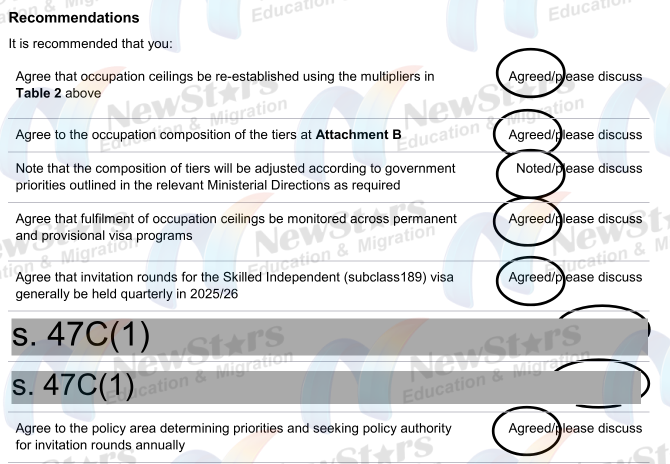
Clear invitation rounds and timing
The Department previously confirmed through several channels that there would be a round every three months this year. For the November round, it also announced the exact invitation date on Facebook for the first time. It may announce dates in advance again, along with official reports for each round.
An annual review of priority occupations
The policy area will conduct a systematic review of priority occupations every year and seek the necessary policy authorisation for how invitation rounds will be delivered before each programme year begins.
Taking state nomination and employer sponsorship into account
The composition of invitation rounds across the year will be adjusted dynamically in light of occupations in other permanent and provisional residence programmes, including Subclass 186/190/491.
Closer coordination with state governments
This aims to prevent duplicate invitations caused by poor coordination of round timing and frequency, and to reduce duplicated government work.
A tiered priority model
The annual ceiling for each occupation will be calculated using the average number of people working in that occupation in Australia, combined with different weighting factors.
How invitation numbers are calculated for each Subclass 189 occupation
Three key factors
- The total number of people currently working in the occupation in Australia
- The occupation’s priority tier, which determines its weighting factor
- The number of people in that occupation who secured permanent residency through Subclass 186/190/491 in the previous financial year
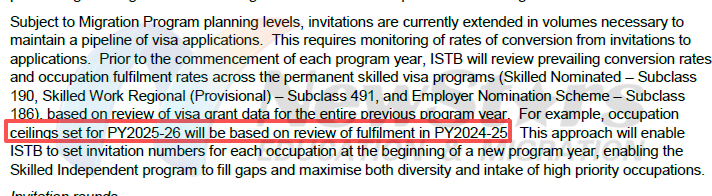
Four tiers with different weighting factors
Tier 1: 4%—the highest-value occupations, including the following
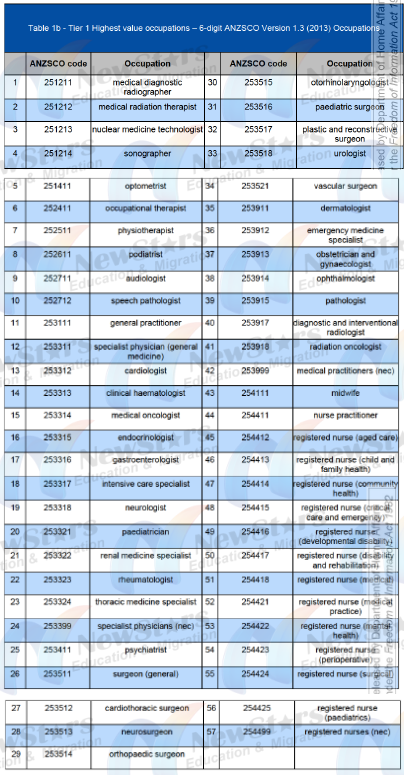
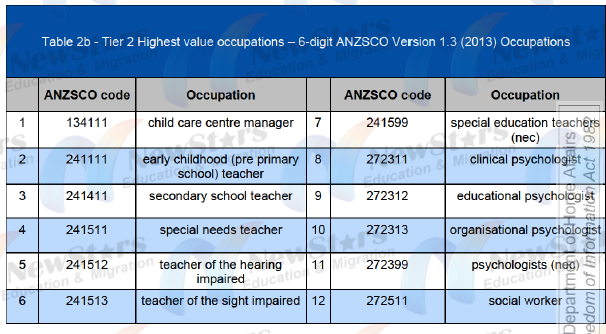
Tier 2: 2%—high-priority occupations
The occupations currently in this tier come from Ministerial Direction No. 105 under s499, excluding Tier 1 occupations. They mainly cover education and healthcare.
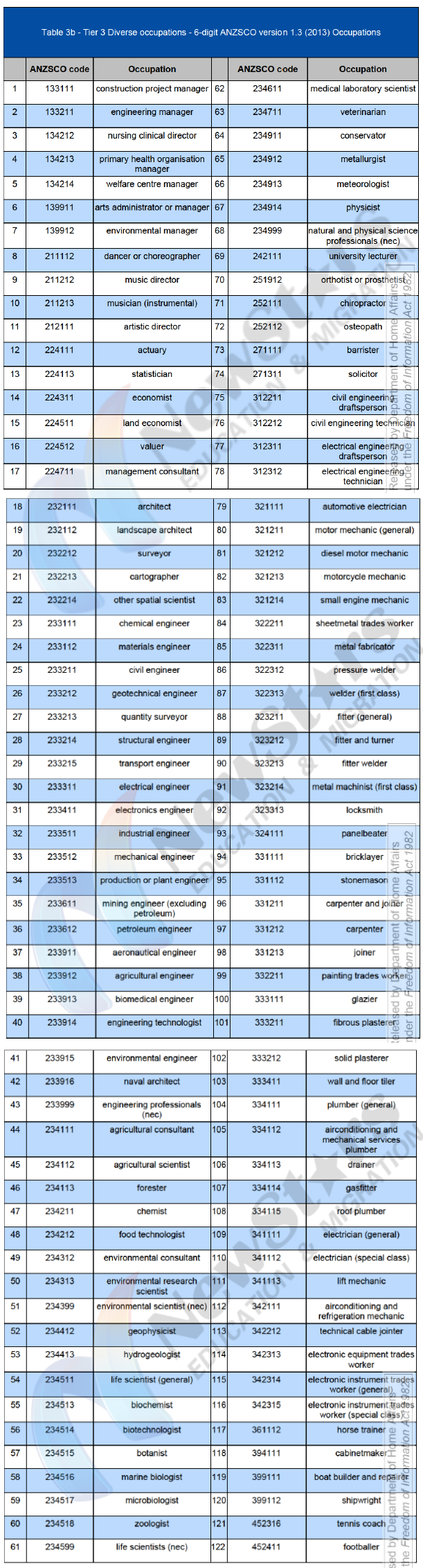
Tier 3: 1%—diverse occupations
These occupations have a ceiling of 1%. This is the largest group, and most of the occupations familiar to us are included here, as shown below.
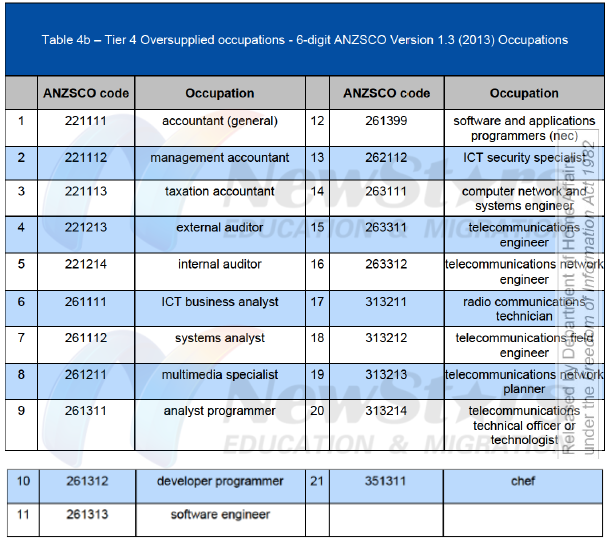
Tier 4: 0.5%—oversupplied occupations
These occupations have large EOI backlogs, and the Department has long kept their allocations (invitation numbers) under tight control. Allocating too many invitations would use up a large number of places at once. Examples include the very popular accounting and auditing occupations, IT occupations and chefs.
How does the calculation work? An example
Occupation A has 50,000 workers in Australia and is in Tier 3, with a 1% weighting. In the previous financial year, 1,000 people in this occupation obtained PR through employer sponsorship, specifically Subclass 186.
Scenario one: 1% of 50,000 is 500. Subtract the 1,000 people who obtained PR through employer sponsorship in the previous financial year and the result is negative, so this occupation is very likely to receive no invitations this year.
Scenario two: if only 200 people in that occupation secured PR through employer sponsorship in the previous financial year, the calculation would be 500 − 200 = 300, leaving scope for invitations.
What this means:
- A higher tier is clearly more favourable, as with various medical occupations.
- A large Australian workforce is a positive factor, as with nursing and construction trades.
- A large number of employer-sponsored applicants in the occupation is a negative factor.
Here are the top ten Subclass 186 occupations for 2023–24 for reference (the 2024–25 figures have not yet been released).
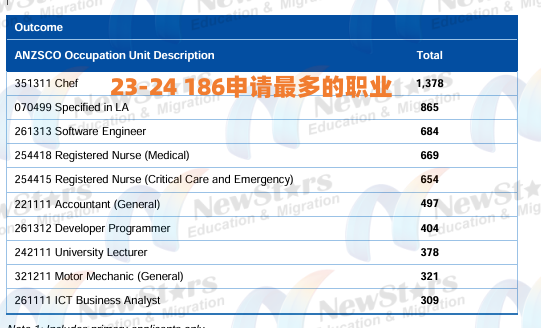
Chefs, accountants, software engineers, developer programmers and ICT business analysts have large numbers of employer-sponsored applicants and sit in the lowest tier, with a weighting of just 0.5%, so invitation numbers will be very low.
Although many nurses also take the employer-sponsored route, their higher tier and large workforce mean we can still see substantial invitation numbers.
For people hoping to learn a trade, studying cookery with a view to skilled migration has already become quite difficult. By comparison, trade occupations have large workforces and face considerable difficulty applying directly for Subclass 186, which helps ensure invitation numbers under Subclass 189.
There are now quite a few trades involving lighter physical work, including some suitable for women, such as tiling,
Finally, this calculation is intended to give you an idea of where your occupation stands. The allocation is an annual invitation ceiling, not a commitment to issue that many invitations, and is for reference only. The Department says that, in theory, there is also an occupational floor of 500 places, but actual numbers will still depend on how many invitations are planned for each round.
The document also broadly explains where this calculation came from. Having a calculation is better than having none, and having a plan is better than having none. Better communication with state governments to reduce duplicate invitations is itself a significant improvement, although its effectiveness still needs to be tested.