The Committee for Economic Development of Australia (CEDA)recently analysed data from the Department of Home Affairs and Seek, and found that Australia has23% of permanent migrants (PR) currently working in jobs below their skill level.
This is a major blow to Australia’s productivity. The report estimates that between 2013 and 2019, under-utilised skills cost the permanent migrant workforce at least$1.25 billion in lost wages,worsening the skills shortages faced by businesses, and it will continue to drag on Australia’s overall economy.
Among migrant occupations,accountants, civil engineers and chefsare the three professions where skills are hardest to match to actual jobs.
A lack of local work experience and local social networks, and language difficultiesare the common barriers faced by people who have not been able to find work in their chosen field.
The mismatch between migrants’ skills and their jobs is an old, familiar problem – the question is how to solve it. So CEDA doesn’t just want to raise the problem, it alsowants to offer recommendations for solving it.

Solution?
They have proposedsetting up a new, government-regulated online skills-matching employment platform that would allow skilled migrants to register their skills, and allow accredited employers to hire migrants through the platform.
This platform should be provided by an existing job platform provider, selected through an “appropriate procurement process”,with an established online job provider operating the platform expected to lower employers’ upfront and ongoing costs of participation.In effect, it simply separates out the target group – the process and listings should be almost identical to those for local job seekers.

As this platform matures,it will use data and algorithms to “push” relevant jobs to migrant applicants, and alert employers to the skills needed for new hires joining the platform.A mature platform will also provide a more real-time source of data on skills demand and supply.


That said, CEDA has also noted that, to ensure the local Australian workforce is not disadvantaged by cheap overseas labour, the platform would need to be limited to certain industries and “a defined range of occupational skill levels”,but practicality must also be carefully considered, and the list should not be too strict, to avoid repeating the old problems of the current system.
Why NOW?
Why is CEDA raising this issue again now, and offering systematic recommendations?Because they believe that as Australia emerges from the pandemic, it needs a skilled migration system that is flexible and responsive to economic needs.Australia’s skilled migration system has served the country well, but in some areas the system needs improvement.
“We’ve heard from some members who have consistently been concerned about skills shortages, while international borders remain closed, making it impossible to access the skills needed to drive growth and investment. Beyond the fact that many migrants are working below their skill level, the migration system has also been slow to respond to rapidly emerging skill needs (such as digital and data), which means Australia cannot keep up with global competition.”
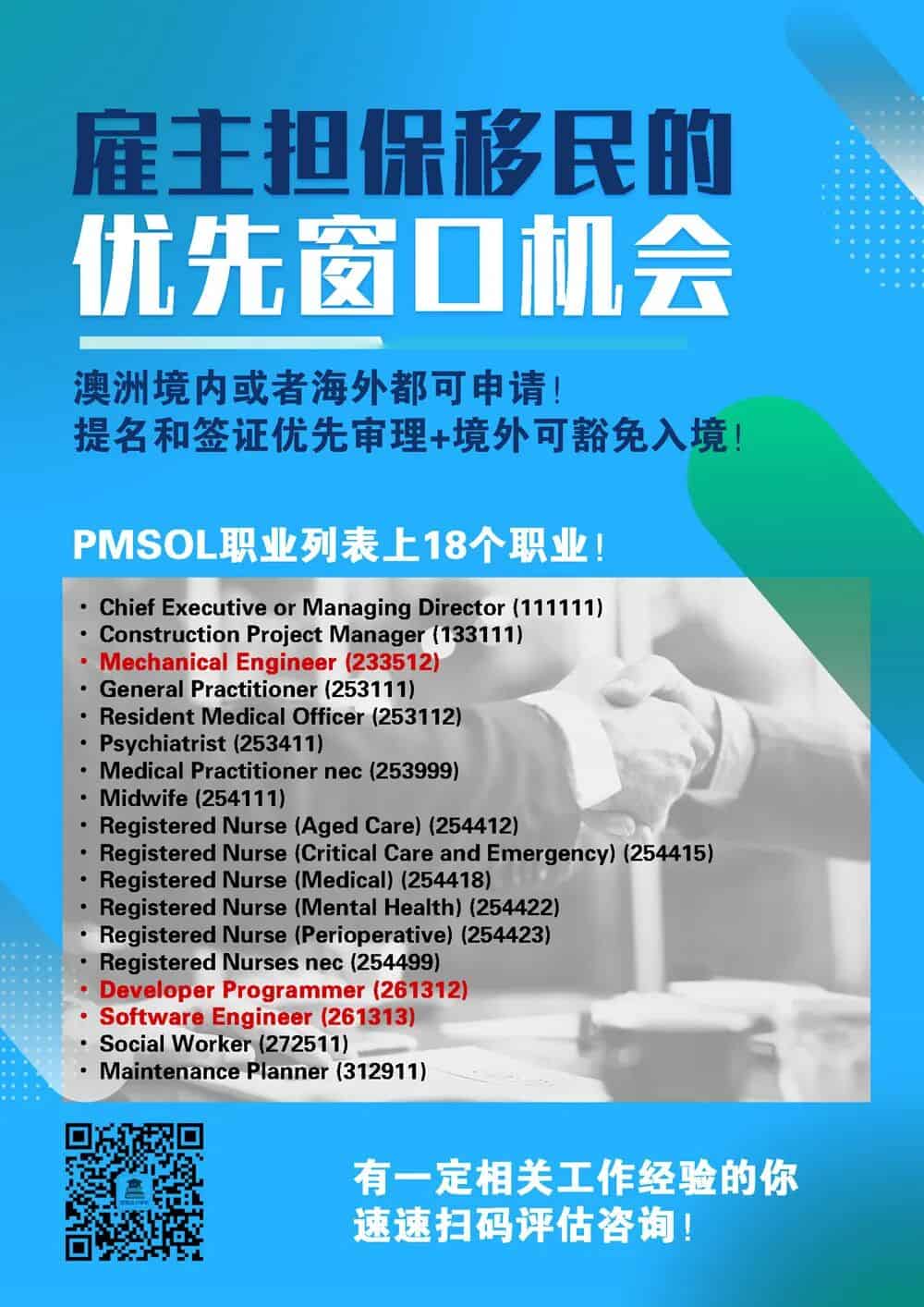
As for the changes the Australian government has already made to visa programmes – such as launching the Global Talent Independent (GTI) programme and introducing the Priority Migration Skilled Occupation List – CEDA believesthese are just “stopgap measures”, “what we need is structural and sustainable change, along with a system that evolves as skill needs change.”
Beyond this platform, they also recommend that newly arrived migrants become eligible after 6 months rather than 4 years forunemployment benefits,which would also give permanent skilled migrants a better chance of finding suitable work. In addition,the government should also be more transparent about how it calculates which occupations are considered in demand and included on the skilled occupation list,which would help the system better serve both employers and skilled migrants.
Does that make sense?

↓ Short video recommendation ↓

Click the image to read the full article

Free visa applications, staying in Australia long-term, accumulating points while waiting for an invitation, some allowing work! Subclass 485/500 student visa/WHV/parent visitor visa – all can be used this way!

At last! From 19 April, some people can enter and exit Australia quarantine-free, including those on temporary visas already in Australia!

Limited-time opportunity! This migration stream currently offers the best application window – N successful invitation cases recently! Requirements are set to rise!

Accountants/teachers/social workers/chefs and more are back on the NSW state nomination list! Subclass 190 invitations keep pouring in! Canberra has updated remaining quotas and mandatory documents!

Opportunity knocking? Accountants/auditors/social workers/early childhood educators/marketing specialists and other popular occupations are back on the NSW Subclass 491 list! Full updated regional list attached


Accountants/ICT and other occupations have recently been approved! Still scrambling for points for 189/190/491? Still waiting for an invitation? You could switch to this PLAN A!

Migration news sharing and Q&A group

Step 1: Press and hold to add our consultant

Step 2: After adding, please












NSW state nomination occupations, requirements and success stories – updated!Click “Original Link”, to see the latest NSW Subclass 190/491 news!