
Too Many Priority Occupations Adding 45 Minutes Per Application? Minister Explains Why IT and Accounting Were Removed from the Priority List — Skilled Migration to Be Market-Driven!?


Several major Australian companies recently suffered large-scale data breaches — including Optus and Medibank — affecting tens of millions of people living in Australia.

At this critical moment,the Minister for Home Affairs issued Ministerial Direction No. 100,which placed the vastmajority of skilled migration visas into a priority processing category(with no order of precedence between categories), and specifically stated thatoffshore primary applicants would receive a higher level of priority. For more information, see:New Ministerial Direction: Subclass 190/189/491/887 and Other Skilled Visas Prioritised — Will It Actually Speed Things Up? NSW State Nomination Opens New Stream Tomorrow!

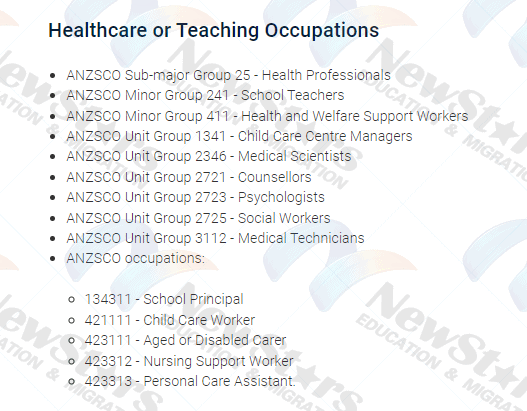
Although the categories carry no order of precedence, different circumstances still do, withapplicants in Healthcare or Teaching placed at the highest priority level.
Some observers have connected Ministerial Direction No. 100 with the recent cybersecurity crisis and the earlier PMSOL.

We should clarify here thatalthough both involve priority arrangements, they were designed for quite different purposes.


Ministerial Direction No. 100-primarily targetingthe processing of migration visas


PMSOL-primarily targetingemployer-sponsored visa processing.The PMSOL was introduced during the COVID border closure period to fast-track processing and entry into Australia for certain in-demand occupations. In practice, it was also found to slightly speed up other visa subclasses under those nominated occupations on occasion.

The list ultimately grew to 41 occupations — roughly half in healthcare, along with common migration occupations such as ICT, accounting, auditing, civil engineering, ANZSCO 2613/2621, and chefs.


The PMSOL page on the Department of Home Affairs website is no longer accessible.


Comparing the two priority lists,the ICT-related occupations that have been ‘removed’include
ICT Security Specialist (262112), Analyst Programmer (261311), Software and Applications Programmers (261399), Software Engineer (261313), and Developer Programmer (261312).

Critics argue that removing these IT occupations from the priority list — in the midst of a cybersecurity crisis and well-documented skills shortages — makes it harder for employers to recruit IT professionals and harder for Australia to attract global talent.

Does a shortage in healthcare and education mean there is no shortage in IT?

The Tech Council of Australia and the Council of Small Business Organisations expressed shock at the sudden change made without industry consultation.

They said: ‘In the middle of the worst national cybersecurity crisis we have ever faced, the government has decided now is a good time to deprioritise these skills in our migration system.’

In addition, the second item in the new priority order:employer-sponsored applications from Approved Sponsors with Accredited Status will be prioritised above others.
One of the requirements to become an Approved Sponsor is that the business must have had an annual turnover of at least AUD$4 million in each of the past two years,which effectively excludes many tech start-ups and small businesses. This change is clearly at odds with what we are trying to achieve, and inconsistent with the government’s stated vision of enabling small businesses to participate.


Minister’s Response


O’Neil’s response was that these changeswould speed up visa processing times across all categories, including cybersecurity and technology.


She said the previous ministerial direction prioritised so many occupations and sectorsthat each application was taking an additional 45 minutes to process.


Her approach is now tostreamline the system so that all applicants are ‘better off’, with an expectation that overall wait times will improve.


Since 1 June,43,000 temporary skilled visa applications and 47,000 permanent skilled visa applications have been finalised.Meanwhile, temporary skilled visa grants for the 2022–23 financial year have increased by 120% compared to the same period last year.

Without a list, everyone makes a case for their occupation to be prioritised. With a list, there will also be debate.Whyis this occupation on the list but not that one? Perhaps the simplest approach is best — after all the talk and all the research, what matters most is execution.At least for now, execution looks reasonably solid — today we continue to receive notifications of Subclass 190 grants for applications lodged as recently as September 2021, with many in the IT sector.

We are just a little curious —what exactly accounts for that extra 45 minutes of processing time per application?


No occupation list — let the market decide?
Professor Roger Wilkins, Deputy Director of the Melbourne Institute, also believesthere is no need to make it this complicated — skilled migration demand should be driven by market forces,where international students migrate through whatever occupation they actually find work in after graduating, without the need for an occupation list or definitions of skill shortages. Interesting?

Professor Roger Wilkins argues that the government shouldstop trying to specifythe exact number of healthcare, IT, or infrastructure skilled migrants it wants in order to‘centrally plan’ the outcomes of the entire programmeand should instead abandon occupation lists entirely — letting market forces play the primary role.

‘It is very difficult to determine, or even define, what constitutes a skills shortage, let alone at the level of specific occupations,I think we simply need to focus on general skills — young, educated migrants will self-select to fill the gaps,and that decision will naturally be shaped by market conditions.

It makes a degree of sense — regardless of discipline or occupation, what ultimately matters is securing actual employment.
But if growth is left entirely to market forces without any guidance, might some niche but genuinely important needs end up being overlooked?

However, Jennifer Westacott, CEO of the Business Council of Australia, argues that the migration programme requiresbetter management and planningto address community concerns about increasing migration. She supports a generous migration programme, but argues that the best way to win public support for such policiesis to resolve infrastructure and other underlying challengesin order to build public confidence in migration.

It is always easy to voice an opinion, harder to execute — and even harder to execute consistently in a way that takes care of all stakeholder interests over the long term.

Study Abroad & Migration — Video Tips

Click the image to read the full article

 Previously Recommended 


New Ministerial Direction Prioritises Subclass 190/189/491/887 and More

Offshore-Only Applicants Continue to Receive NT MINT Invitations at 65 Points!

‍‍‍‍‍‍‍‍

Subclass 189 Continues to Invite Large Numbers of Offshore Applicants, Minimum 65 Points


Migration News, Q&A and Discussion Group

Step 1: Long-press to add our customer service contact

Step 2: After adding, please



Attention!Please verify you are speaking with a genuineverifiedNewstars consultant!


Study abroad and migration consultations across all regions

↓↓ Contact our consultants ↓↓

Sydney

Melbourne

Canberra

Brisbane

Adelaide

Hobart

Beijing

Guangzhou

7.

Scan to follow the Newstars official WeChat account

Reply in the WeChat accountwith any of the numbers or keywords below (not in the article comments section)to receive the most timely and professional migration updates!Reply [A] to view the index (includes all key topics)!

Reply:0000 → New policy update from 16 November (Subclass 491 + skilled migration points)

Reply: 000 → Latest visa/citizenship processing wait times

Reply: 001 → Latest Subclass 189 EOI official report

Reply: 002 → Subclass 189 Skilled Independent migration

Reply: 003 → State nomination (Subclass 190) by state

Reply: 004 → Subclass 489 Regional state-nominated migration

Reply: 005 → Student entrepreneur/investor migration

Reply: 006 → Parent migration visa

Reply: 007 → Employer-sponsored visa

Reply: 008 → Subclass 485 visa

Reply: 009 → Partner migration/points top-up

Reply: 010 → Work experience points

Reply: 011 → Professional Year (PY) points

Reply: 012 → NAATI/CCL points

Reply: 013 → Regional area points

Reply: 014 → Visitor visa

Reply: 015 → Working holiday visa

Reply: 016 → TAFE study abroad

Reply: 017 → Australian international students migrating to Canada

Reply: 018 → Subclass 407 Training visa

Reply: 019 → Subclass 408 Temporary Activity visa

Reply: 020 → New Zealand migration

Subclass 189 Finally Inviting Accountants and IT! NSW Subclass 491 Adds Priority Stream!Clickthe ‘Original Link’ — Weekly Migration Bulletin (Video Edition)