Department of Home Affairs: Parent Visa Wait Now at Least 12 Years! Contributory Stream? The Latest Subclass 143 Wait-Time Projections and All Options to Bring Your Parents to Australia Sooner

A recent update to the Department of Home Affairs website caught our clients’ attention:

Contributory Parent migrationthe queue wait timehas grown to at least 12 years, up from at least 6 years.

This financial year, news has circulated that parent migration places are increasing and processing is speeding up — so how has the estimated wait time actually doubled?Has the Department of Home Affairs made an error?


With skilled migration grants on the rise, many clients who have just received their PR know that parent migration is slow — so the moment their visa is approved, they want to start the parent migration process as soon as possible.
The first question we always hear is:If we lodge now, how long is the wait?
Our usual answer: if quotas don’t increase, upwards of 10 years.
The client then clarifies: “I mean the paid one, not the free queue.”

The reality is: the non-contributory queue (no contribution fee required) currently stands at a minimum of 30 years — and the Subclass 143 contributory stream is genuinely over 10 years.


Current estimate of at least 12 years — broadly correct


The Department’s original 6-year figure was calculated as follows: in 2023 they are processing applications lodged in 2017, giving an apparent 6-year wait.

In practice, however, the actual wait is determined bythe total application backlogandthe annual quotaBecause the quota itself isdynamic — if it increases or decreases in future, the estimated wait will shift accordingly.

We can therefore only advise clients based onthecurrentquota at the time (approximatelyhow long) — future changes are beyond anyone’s control.


Based on the current6,800 contributory places per financial year, 1,700 non-contributory places, and the monthly lodgement and backlog data we have reviewed,

Based on current projections, the contributory wait is approximately 12 years — consistent with the Department’s own figures.


If you have not yetlodged a migration visa for your parents

Now that we’ve established the 12-year figure is real — not an error — the best course of action is to lodge as soon as possible.

① If your parentsare fairly certain they want to migrate to Australia, consider lodging a Contributory Parent visa
Basic process and requirements for the Contributory Parent visa:
Step 1 — Confirm the child can sponsor:
1. Is an Australian PR or citizen
2. Has resided in Australia for at least 2 years
3. Meets the balance-of-family test — at least half of the applicant’s children have already migrated to Australia

Step 2 — Choose Subclass 143 or 864 (Aged Parent)
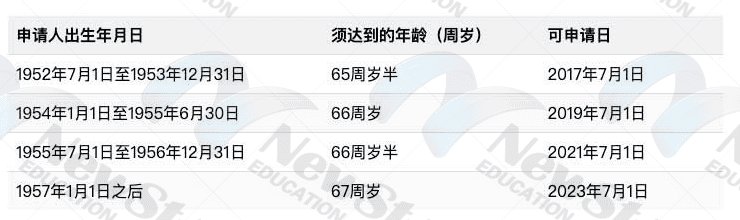
If the applicant has reached Age Pension age at the time of application, they may lodge a Subclass 864 Contributory Aged Parent visa. The Subclass 864 used to process faster than the 143, but the Department suspended 864 processing some time ago to balance the two streams.
The Subclass 864 can be lodged and granted onshore. The Subclass 143 can only be granted onshore under COVID-19 concession conditions — the application must have been lodged before 24 March 2021 and the applicant must have been in Australia on 24 March 2021. Applications that do not meet both criteria will generally be required to depart Australia before the visa can be granted.
Age requirements for lodging the Subclass 864 Contributory Aged Parent visa:

A common follow-up question:Should we lodge for one parent first, or both at the same time? We generally recommend lodging together — see the article below for the full analysis:Lodge one parent first, then sponsor the spouse later — does it actually save money?

Step 4 — When the case officer requests further documents
The financial sponsor (who may be the sponsoring child, another Australian PR, citizen, or a company) must provide income evidence for the past two financial years and proof of AOS (Assurance of Support) payment. The applicant must also complete a medical examination.
The income threshold for the financial sponsor is determined by the number of persons being assured, the number of the sponsor’s dependent children, and any prior sponsorship history.

② If your parentsdo not yet have a strong desire to migrate, you can still lodge a Subclass 103 (non-contributory queue) in the meantime
As mentioned above, all parent migration streams have extremely long wait times. Waiting until your parents make up their minds before lodging means losing valuable years in the queue.

By lodging a Subclass 103 now, you hold a place in the queue. When your parents later decide to migrate, the queue can be converted to a contributory stream. When a non-contributory parent visa (e.g. Subclass 103 or 804) is converted to a contributory parent visa (Subclass 143 or 864), the time already spent in the queue counts — no time is wasted.If your parents later meet the age requirement, the Subclass 103 can be converted onshore to a Subclass 864 Contributory Aged Parent visa. Not only does the earlier 103 queue time count, but your parents can remain in Australia on a bridging visa while awaiting the grant!

On costs: when lodging a Subclass 103, you initially pay the visa application charge for the primary applicant only (AUD $4,623.84 in 2022–23), which secures a place in the queue. If you later convert to a contributory stream and need to add a second applicant, you save over $2,000 in Subclass 103 secondary applicant fees!
For more detail, read:Why you should lodge at least a Subclass 103 for your parents after getting PR


To find out which parent migration pathway suits your situation,
and for detailed application requirements and lodgement procedures,
please contact our team to arrange a consultation.


Wanting your parents to join you inAustralia sooner


Visitor visa for parents of PRs and citizens
Both onshore and offshore applications are currently processing and being granted normally.The difference is thatonshore applications take a little longer to process,which is not necessarily a bad thing.

If you want to avoid your parents having to leave Australia repeatedly and renew their visitor visa,
the Subclass 870 Sponsored Parent (Temporary) visa is an excellent option.The initial Subclass 870 can be granted for 3 or 5 years and can be extended to a maximum stay of 10 years.

Processing pathway and timeline:Processing follows a two-stage approach: the sponsor (the child) first obtains sponsorship approval, then the visa is lodged. It is advisable to begin preparing while your parents still hold a valid visa in Australia.

Both onshore and offshore lodgement are currently available.Onshore lodgement requires prior permission(and you will need to check whether the 8503 No Further Stay condition on the current visa needs to be waived),so allow extra lead time. Once granted, your parents can remain in Australia without needing to leave repeatedly.

Subclass 870 processing has also accelerated — sponsorship approval typically takes 1–3 months, and the visa stage likewise takes 1–3 months.

Advantages:No education, work experience, or asset requirements. Long stays in Australia are permitted.No balance-of-family test required. Maximum single stay of 5 years; up to two applications for a total stay of 10 years.

Sponsor requirements:The sponsor must be aged 18 or over and must be the applicant’s child or the child’s partner.

Sponsor income requirements:If one sponsor is sponsoring one parent, the sponsor’s income in the preceding financial year must be at least AUD $83,454.80. If that is insufficient, a spouse’s income may be combined, provided the sponsor contributes at least a 1:1 share.

If a parent migration application has already been lodged, the Subclass 870 can keep parents in Australia throughout the wait. If no migration visa has been lodged yet, we recommend lodging the migration application first, then applying for the Subclass 870.

For visitor visas and Subclass 870 long-stay visas for parents,
please contact our team below to arrange a consultation.


Recent Subclass 143 processing and grants


Further documents requests for the Subclass 143 contributory stream are currently being issued to applications lodged in mid-to-late April 2017. The interval between completing the further documents stage and receiving the contribution fee invoice has extended somewhat recently, likely due to public holiday periods.


[Subclass 143 Parent Visa — Grant Stories]

Lodged late August 2016 · Further documents requested September 2022 · Granted 8 February 2023


Both parents plus a minor sibling — lodged mid-January 2017, further documents notice received mid-December last year; full family granted 8 February 2023.


Lodged late November 2016 → further documents late November 2022 → officially granted 11 January 2023!

Lodged September 2016 — granted January this year


Lodged November 2016 — granted January this year

Whatever visa pathway, wherever you are —
we wish everyone a speedy family reunion.

 Recommended Reading — click image to read article 


Engineering students: experience living and working in Australia at low cost.

Accountants scoring 65–80 points — more pathways than you think!

Low-score invitations — everyday occupations that aren’t migration favourites!


Migration Updates Community


2023 


Step 1: Long-press to add our customer service contact

Step 2: After adding, please


Study Abroad · Migration · Visas — We Are the Professionals



Attention! Please verify you are dealing with a genuineNewstars consultant!


Study & Migration Enquiries — Regional Contacts


Sydney

Melbourne

Canberra

Brisbane

Adelaide

Hobart

Beijing

Guangzhou

Follow the Newstars Official WeChat Account

Reply in the Official Accountwith any of the numbers or keywords below (not in the article comments) toreceive the most timely and professional migration updates!Reply [A] to view the full index (all topics covered)!

Reply: 0000 → 16 Nov policy update (Subclass 491 + skilled migration points)

Reply: 000 → Latest visa/citizenship processing wait times

Reply: 001 → Latest Subclass 189 EOI official report

Reply: 002 → Subclass 189 Skilled Independent migration

Reply: 003 → Subclass 190 state nomination (by state)

Reply: 004 → Subclass 489 regional state nomination

Reply: 005 → International student business and investor migration

Reply: 006 → Parent migration visa

Reply: 007 → Employer-sponsored visa

Reply: 008 → Subclass 485 Graduate Work visa

Reply: 009 → Partner migration / points bonus

Reply: 010 → Work experience points

Reply: 011 → Professional Year (PY) points

Reply: 012 → NAATI/CCL points

Reply: 013 → Regional area points

Reply: 014 → Visitor and family visit visa

Reply: 015 → Working holiday visa

Reply: 016 → TAFE study

Reply: 017 → Australian international student migration to Canada

Reply: 018 → Subclass 407 Training visa

Reply: 019 → Subclass 408 Temporary Activity visa

Reply: 020 → New Zealand migration

2023 Recommended

Backlog cut by 400,000 at year-end! Is temporary-to-permanent reform the key focus?Tap“Original Link” for Migration Weekly Bulletin — video edition